Concentrated Wisdom Editorial Team researches, writes, and fact-checks this guide against primary sources before publication.
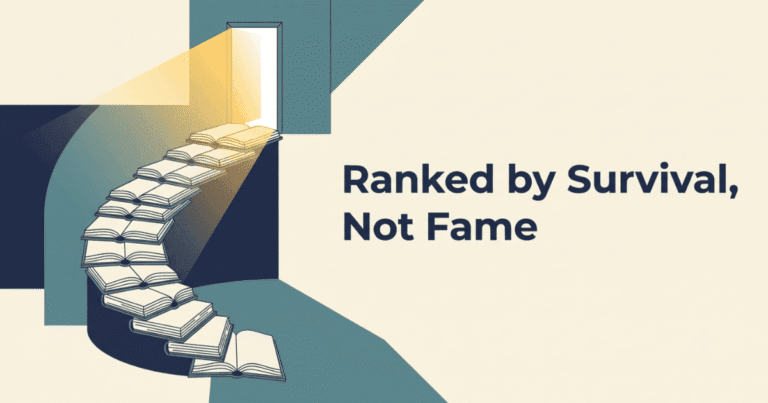
Most lists of good philosophy books for beginners rank books by fame, not by whether a first-time reader actually survives them. This guide ranks eight books against the Chapter-Two Threshold, a test of whether a beginner finishes a book’s first real argument or quietly closes it for good, sequenced from narrative history through modern introductions to applied practice.
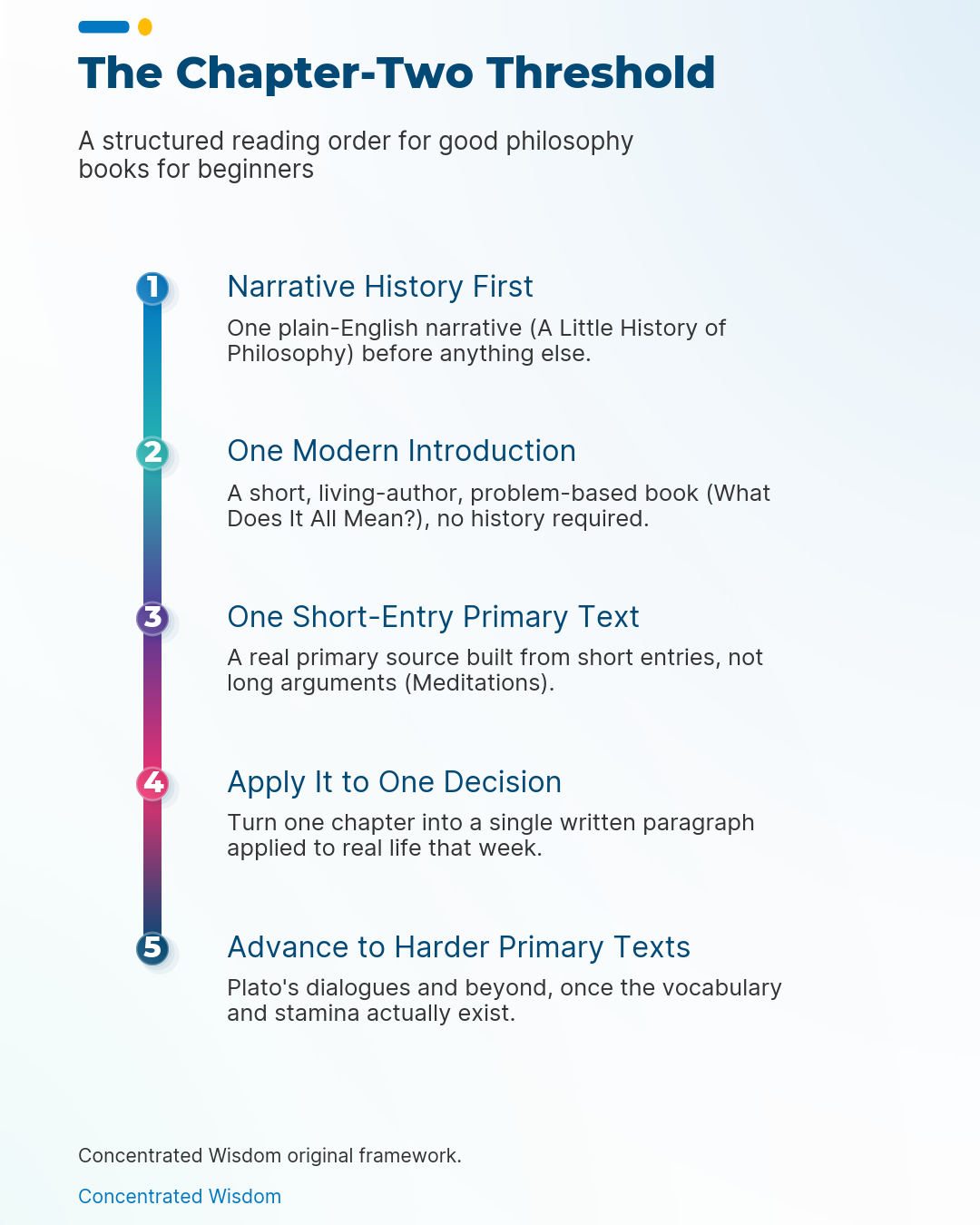
Good philosophy books for beginners, ranked in the right order, start with Nigel Warburton’s A Little History of Philosophy (a plain-English narrative covering Socrates to Peter Singer), Marcus Aurelius’s Meditations in Gregory Hays’s translation (short diary entries, not extended arguments), and Plato’s Five Dialogues once a reader is ready for a primary text. From there, Jostein Gaarder’s Sophie’s World, Thomas Nagel’s What Does It All Mean?, and Viktor Frankl’s Man’s Search for Meaning widen the questions being asked. Massimo Pigliucci’s How to Be a Stoic and Seneca’s Letters From a Stoic close the list by turning the reading into daily practice. These are sequenced by a single test, whether a beginner survives a book’s first real argument or quietly closes it by chapter two. The order matters more than the list itself, jumping straight to a harder primary text like Plato’s Republic before finishing this sequence is the single most common reason a promising beginner quits philosophy after one chapter.
Hand a beginner Plato’s Republic with no warning and watch what happens next. They open strong, hit the shipbuilder analogy in Book Six, and quietly set the book down, often for good. This exact moment happens to countless first-time readers, and the failure is almost never about intelligence. It is about sequence. Every pick below is ranked against the Chapter-Two Threshold, a test of whether a beginner survives a book’s first real argument or quietly closes it for good.
Ancient Foundations
What Order Should You Actually Read Philosophy Books In
The order that works is narrative first, one short primary text second, and the primary text chosen for how short its arguments run, not for its place in the philosophical canon. Chronological importance and beginner readability are two different rankings, and most lists confuse them.
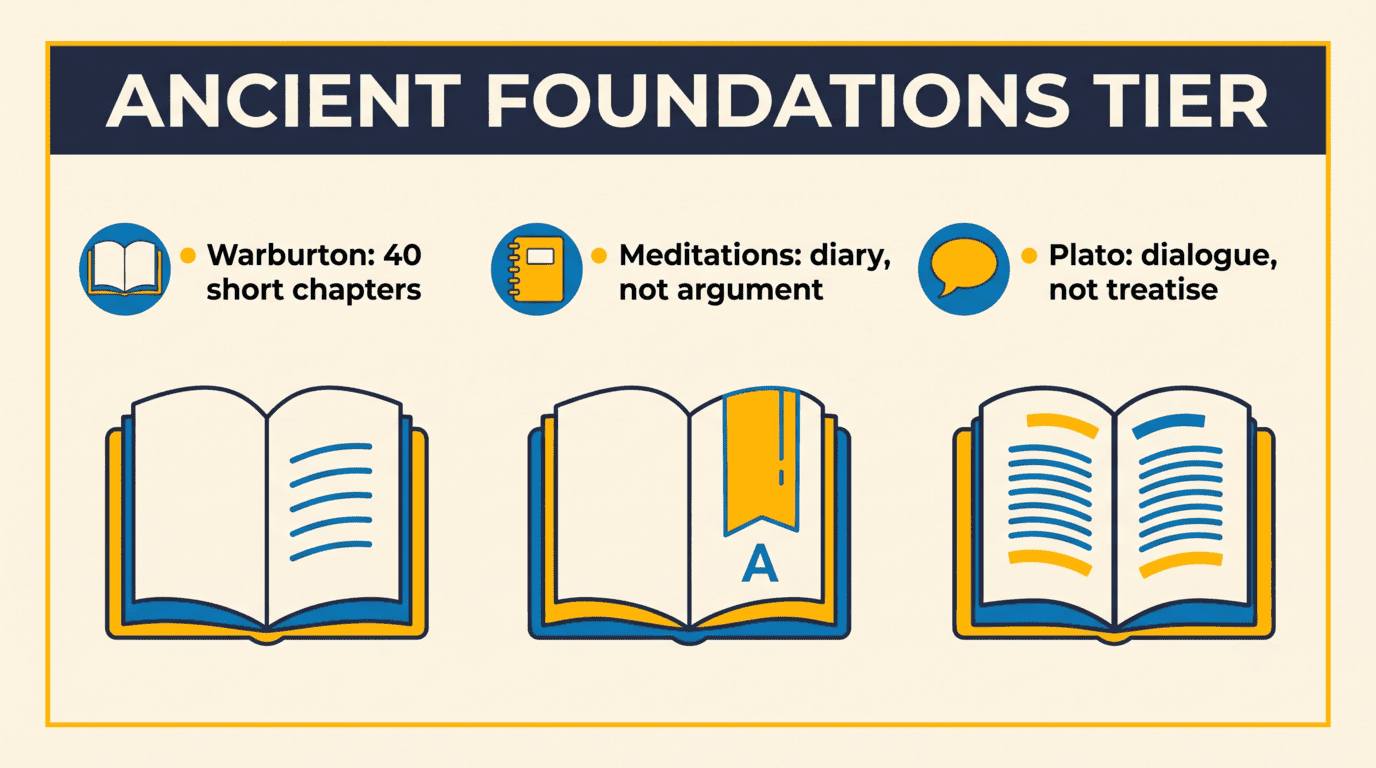
Nigel Warburton’s A Little History of Philosophy goes first on every entry-point list in this reading order. Forty short chapters, four or five pages each, carry a reader from Socrates to Peter Singer without a single unexplained technical term, published by Yale University Press in 2011. Nothing here demands prior knowledge, which is exactly the job of a first book.
The second Ancient Foundations pick is a real primary text, and it works precisely because it doesn’t read like one. Meditations, Marcus Aurelius’s private notebook in Gregory Hays’s 2002 translation, is built from short diary entries rather than extended argument chains. A beginner can put it down after four sentences and pick it back up without losing the thread, which is the single quality that gets a primary text past the Chapter-Two Threshold when almost nothing else ancient does.
Once those two land, Plato’s Five Dialogues (Euthyphro, Apology, Crito, Meno, Phaedo, translated by G.M.A. Grube) is the next primary text, not the first. Written as conversation rather than treatise, each dialogue runs about twenty pages, and a reader who already has Warburton’s narrative in their head meets Socrates as a character they’ve already been introduced to instead of a stranger.
Modern Provocations
Where to Go After the Foundations
The pattern behind why beginners abandon a book partway through has nothing to do with a reader’s intelligence or prior reading. Students didn’t quit because a book was hard. They quit because the second book they picked up assumed the vocabulary and stamina of the first one they’d struggled through, with no bridge in between. The three books in this tier are the bridge.
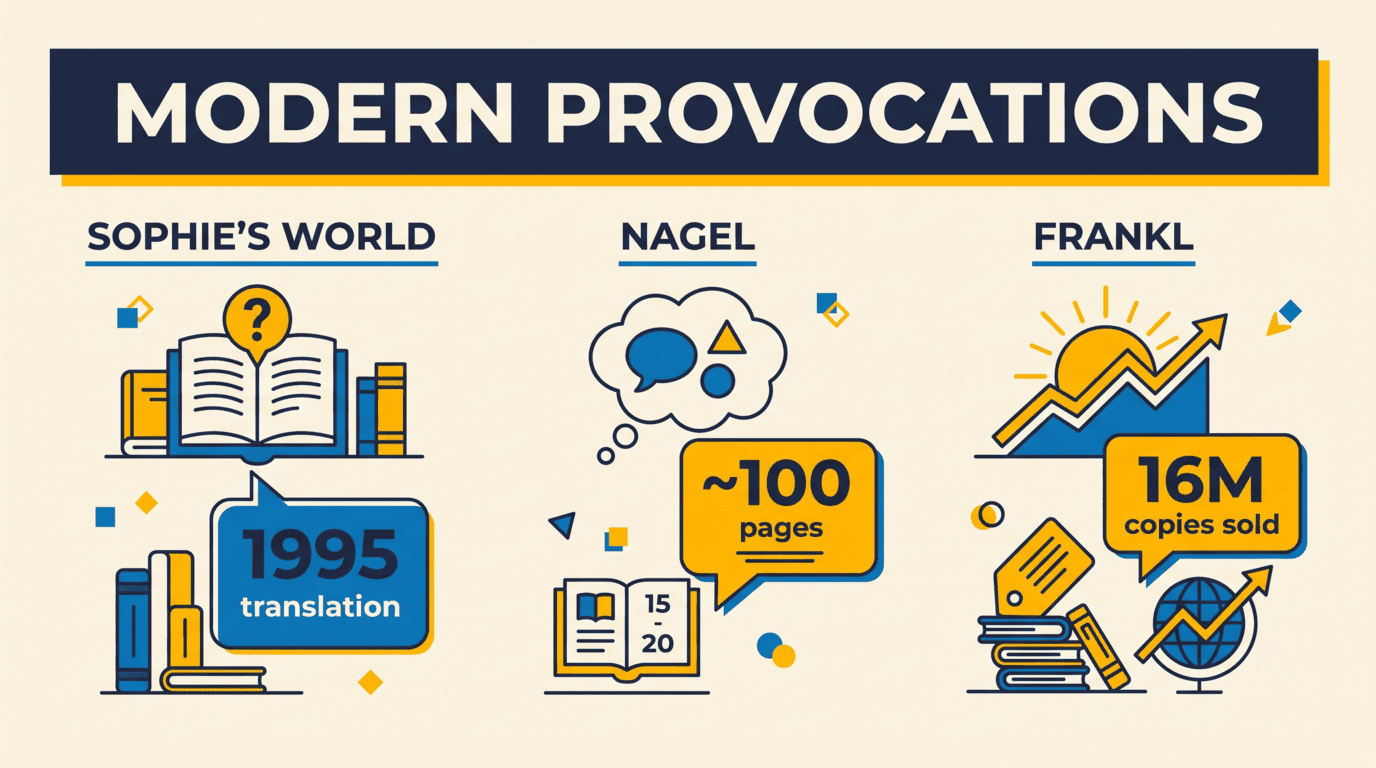
Jostein Gaarder’s Sophie’s World (Norwegian original 1991, English translation 1995) smuggles the entire history of philosophy inside a novel about a fourteen-year-old receiving mysterious letters. The fiction does the work a textbook can’t, it carries a reader past the dry stretches that make people quit reference books.
Thomas Nagel’s What Does It All Mean? (Oxford University Press, 1987) is barely over 100 pages and drops the history entirely. Nagel works through free will, death, and the meaning of life in plain prose with almost no jargon and no name-dropping, which makes it the purest demonstration of what doing philosophy actually feels like, as opposed to reading about it.
Viktor Frankl’s Man’s Search for Meaning started as a German-language memoir in 1946 and reached English readers in 1959. It has since sold over 16 million copies and was named one of the ten most influential books in the United States by the Library of Congress. It earns its spot on a beginner list because it applies philosophy to the worst possible circumstance, a Nazi concentration camp, and comes out the other side with a usable answer rather than an abstract one.
Applied Philosophy for Daily Life
Connecting the Texts to Practical Use
A beginner reading list that stops at theory leaves the actual behavior change on the table. Massimo Pigliucci’s How to Be a Stoic (Basic Books, 2017) is framed as an imagined conversation with the ancient Stoic teacher Epictetus, and it closes each section with a specific exercise rather than a summary, which is what makes ancient Stoicism usable on a Tuesday rather than just admirable in the abstract.
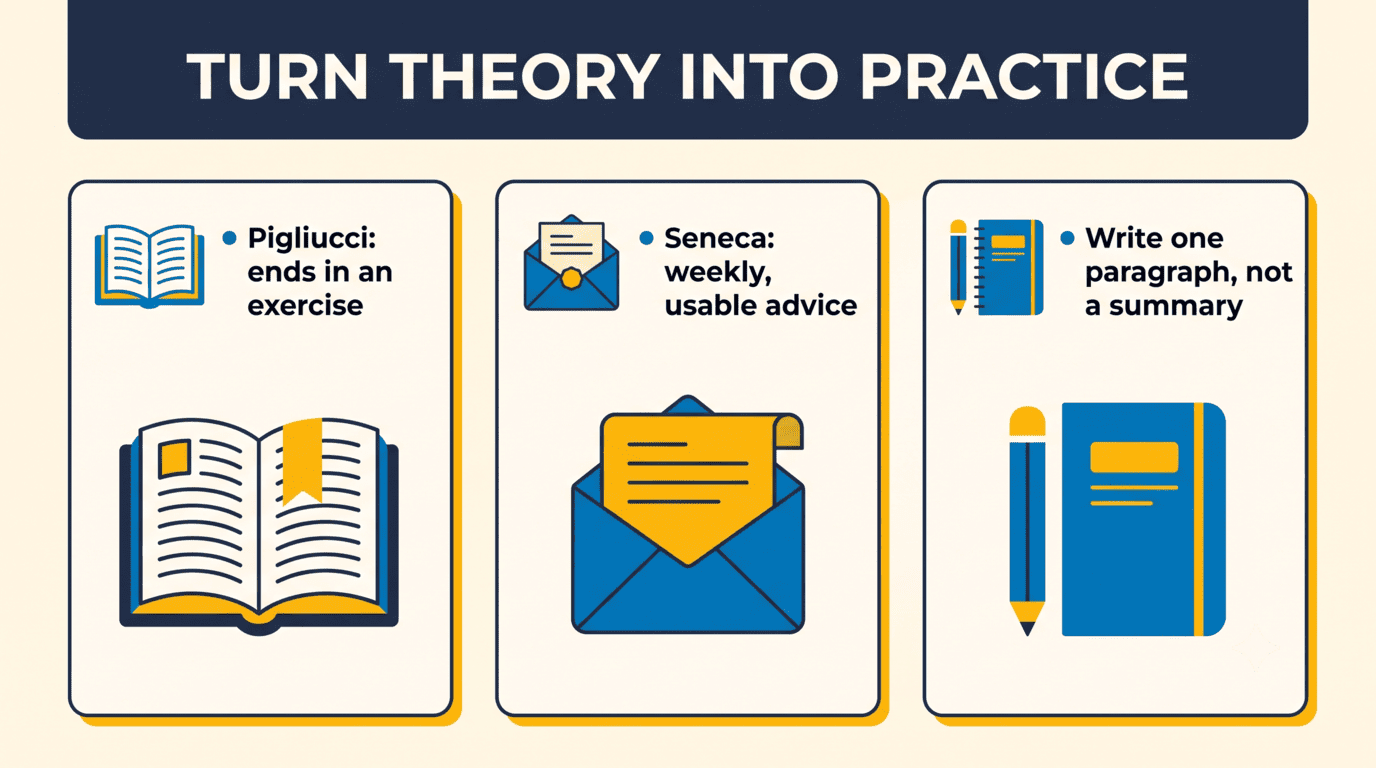
Seneca’s Letters From a Stoic (Robin Campbell’s translation, first published by Penguin Classics in 1969) closes the list. Each letter runs a few pages and ends on a piece of advice specific enough to try that same week, on friendship, loss, or how to spend a day well.
The actual assignment for this tier is simple. After finishing one letter or one chapter, write a single paragraph applying it to a real decision from that week, not a summary of what the philosopher said. A reader who can’t do this after Seneca or Pigliucci hasn’t actually finished the book yet, no matter how many pages they’ve turned.
The Chapter-Two Threshold, Visualized
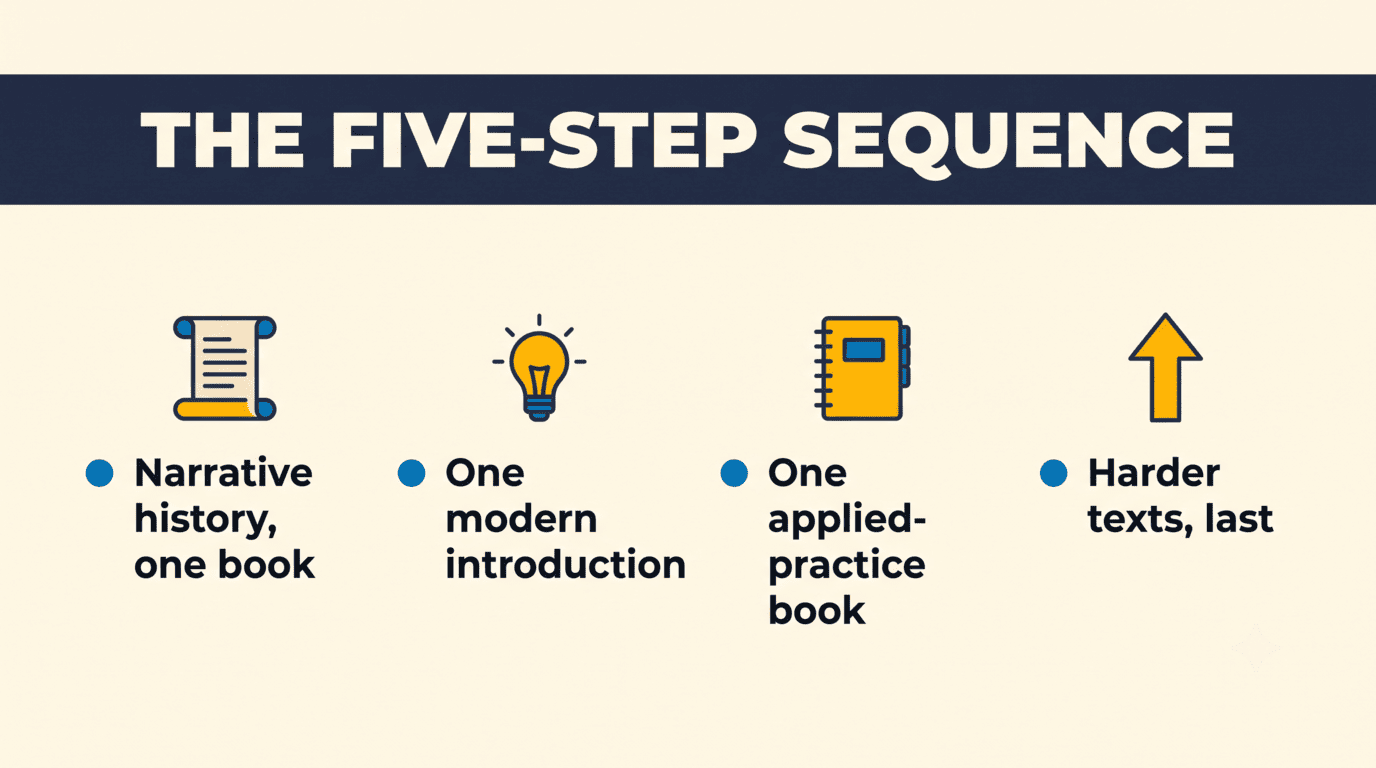
The reading order above compresses into five steps, narrative history, one modern problem-based introduction, one short-entry primary text, one applied-practice book, then harder primary texts once the vocabulary exists. Skipping straight to step five is the single most common reason a beginner abandons philosophy for good.
| Book | Tier | Difficulty |
|---|---|---|
| A Little History of Philosophy, Nigel Warburton | Ancient Foundations | Easy |
| Meditations, Marcus Aurelius (trans. Hays) | Ancient Foundations | Easy |
| Plato’s Five Dialogues (trans. Grube) | Ancient Foundations | Moderate |
| Sophie’s World, Jostein Gaarder | Modern Provocations | Easy |
| What Does It All Mean?, Thomas Nagel | Modern Provocations | Easy |
| Man’s Search for Meaning, Viktor Frankl | Modern Provocations | Moderate |
| How to Be a Stoic, Massimo Pigliucci | Applied Philosophy | Easy |
| Letters From a Stoic, Seneca (trans. Campbell) | Applied Philosophy | Moderate |
Related: Spirituality & Philosophy
Related: Stoicism Relationships
Related: Eastern Philosophy
Frequently Asked Questions
What is the best philosophy book for a complete beginner?
Nigel Warburton’s A Little History of Philosophy is the strongest single starting point, forty short chapters in plain English covering Socrates through Peter Singer, with no prior knowledge assumed. It’s the narrative that makes every book after it easier to follow.
Should I start with Plato or a modern introduction?
A modern introduction first. Plato’s dialogues are more readable than most ancient philosophy, but they still assume a vocabulary a true beginner doesn’t have yet. Read a narrative history and one short modern introduction first, then approach Plato through a subject you already care about.
Is Sophie’s World too simple for an adult reader?
No. The novel is pitched at a teenage protagonist, but the philosophical content is accurate and complete. Adults who find reference books dry often finish Sophie’s World precisely because the story carries them past the sections that would otherwise feel like homework.
How long does a beginner philosophy reading list actually take?
Budget roughly two to three months for the eight books here at a relaxed pace, one book every one to two weeks. The Ancient Foundations tier moves fastest since Warburton and Meditations are both built from short entries, not long argument chains.