
Every episode takes a dense study or scholarly articles most people will never read and turns it into something you'll actually finish. No hype, no hustle-culture noise: only mechanisms that hold up under scrutiny.
 Episode 20 · Out now
Every episode, in order, with full show notes. Filter by the mental model you need right now.
Stress-eating and doom-scrolling aren't willpower failures: they're a habit loop your brain can be taught to rewire.
Are you wondering how to break bad habits like stress-eating or doom-scrolling when sheer willpower simply isn't enough? This episode reveals the fascinating brain science behind our most frustrating compulsions and provides a clear, science-backed path to taking back control. It is a popular myth that it takes a magical 21 days to rewrite a routine, but research actually shows the habit formation timeline can take anywhere from 18 to 254 days. Right now, up to 40% of your daily behaviors are running entirely on autopilot, because your brain naturally shifts control from the goal-directed prefrontal cortex to the basal ganglia to conserve mental energy. While this evolutionary shortcut is great for efficiency, it easily keeps you stuck in unwanted automatic behaviors. In this episode, we dive into the psychology of habit formation and explain why understanding the habit loop is far more effective than just trying harder. By utilizing reward-based learning, you can dismantle the compulsions holding you back, a method clinically shown to produce a 67% reduction in anxiety symptoms and 5x higher abstinence rates from smoking compared to standard programs. We break down a proven, three-step actionable framework you can apply today: start impossibly small and optimize cues; map the habit loop; and create friction and find a better offer. Listen now to stop fighting your brain and start rewiring it for lasting success.
Human lie detection is basically a coin flip: learn the five honest cues your body cannot fake.
Learning how to read body language isn't about becoming a human lie detector, but rather understanding the biological cues that reveal a person's true feelings. If you have ever struggled with trying to mind-read the people around you or second-guessed their intentions, this episode offers a science-based approach to nonverbal communication that you can apply today. Many of us rely on flawed myths to understand others, like assuming crossed arms always mean defensiveness or that averting eye contact automatically signals a lie. But statistically, human accuracy for detecting lies is only about 54 percent, which is barely better than a coin toss. Plus, the famous 93% of communication is nonverbal Mehrabian rule is often completely misapplied. Instead of trying to catch a liar, we explain why you should focus on the body's subconscious survival instincts. By observing limbic system body language, you can spot genuine emotional states because the limbic brain cannot hide its true reactions. To help you stop guessing and start accurately assessing interactions, our host breaks down a five-step, actionable framework drawn directly from biological research: establish a baseline before trying to read anyone, so you can reliably spot meaningful deviations; look for limbic responses, the body's automatic freeze, flight, or fight survival mechanisms that reveal authentic emotional states; read the honest feet, since facial expressions are easy to fake but the feet and legs actively point toward what we like and away from what we dislike; look for clusters, not single cues, since one gesture in isolation rarely tells the full story; and assess comfort versus discomfort by watching for high-confidence, gravity-defying movements versus subconscious stress pacifiers and distancing behaviors. Listen to the full episode now to master these five strategies.

Eight stages, one lifetime: Erikson's roadmap to identity, growth, and purpose from cradle to legacy.
Who are you, and how did you become who you are? Erik Erikson's 8 Stages of Psychosocial Development explain the key challenges we face at every stage of life, from infancy to old age, and how they shape our identity, relationships, and purpose. This episode breaks down each stage's core question, opportunities for growth, and practical ways to navigate life's transitions, no matter your age. Learn how to address unresolved challenges, embrace personal development, and build a meaningful legacy.

162 studies say emotional intelligence predicts academic success better than IQ ever could.
Can emotional intelligence (EI) predict academic success better than IQ? This groundbreaking meta-analysis of 162 studies uncovers how understanding and managing emotions directly impact learning, performance, and student success. Discover why ability-based EI measures outperform traditional predictors like IQ and personality traits and how cultivating self-awareness, emotional regulation, and social intelligence can transform academic and personal growth.

Four disciplines, one framework: build mental grit, emotional control, and physical consistency that outlasts motivation.
Success isn't about motivation; it's about discipline. But how do you build it and stay consistent? This episode breaks down the four key types of discipline: mental, emotional, physical, and habit formation, and provides practical strategies to help you strengthen your self-control one small habit at a time. Learn how to overcome setbacks, develop resilience, and stay committed even when motivation fades. This episode features real-world examples of highly disciplined individuals and shows why discipline is the foundation of success in every area of life.
The science of knowing yourself: how self-awareness sharpens decisions, emotional intelligence, and real growth.
The key to success, better relationships, and personal growth starts with one thing: self-awareness. But how well do you really know yourself? This episode dives deep into the science and psychology of self-awareness, exploring how it shapes decisions, enhances emotional intelligence, and fuels success. Through expert insights, real-life stories, and actionable strategies, learn how to develop deeper self-reflection, gain clarity, and unlock your full potential.
Why bonuses backfire: the research on autonomy, mastery, and purpose that actually sustains motivation.
Traditional motivation strategies are outdated, and science proves it. This episode challenges the idea that extrinsic rewards, such as money and bonuses, drive performance, especially for creative and complex tasks. Learn why intrinsic motivation, rooted in autonomy, mastery, and purpose, creates lasting success. Backed by research, this episode explores how businesses can boost productivity and engagement by fostering a culture of autonomy and meaningful work. Ignoring these principles leads to burnout, disengagement, and the loss of talent.

A science-backed 7-minute ritual: hydration, intention, and movement that resets your entire day.
How you start your morning sets the tone for your entire day, and it only takes 7 minutes to make a difference. This episode introduces a science-backed morning routine designed to increase productivity, reduce stress, and enhance well-being. Learn how to incorporate hydration, intention-setting, gratitude, exercise, mindfulness, visualization, and learning into your morning routine, with research-backed benefits and practical tips to make it stick.
Patience as an active skill, not passive waiting: the mindset shift that builds real resilience.
In this fast-paced world, patience isn't just a virtue; it's a powerful skill that can transform your mental well-being, relationships, and success. This episode explores the hidden costs of impatience, from stress and health problems to strained connections, and reveals the life-changing benefits of patience. Learn how to reframe negative situations, practice mindfulness, and build emotional resilience to handle challenges with greater ease.
Retrain a distracted brain: the science of single-tasking, mindful attention, and deep focus.
In a world filled with constant distractions, the ability to focus deeply is becoming a rare and powerful skill. This episode explores why technology, multitasking, and information overload are sabotaging your attention, and how to take back control. Learn science-backed strategies like mindful awareness, single-tasking, and creating distraction-free environments to sharpen concentration, boost productivity, and enhance creativity.

The mental state where time disappears and performance peaks, and how to enter it on demand.
Ever experienced a moment where time disappears, focus sharpens, and productivity soars? That's the flow state: a powerful mental state where you perform at your best. But how do you achieve it consistently? This episode breaks down the science of sustainable motivation, showing why fleeting enthusiasm isn't enough. Learn how to define clear goals, break them into manageable steps, and celebrate small wins to build a lasting "log fire" of motivation instead of chasing short-lived sparks.
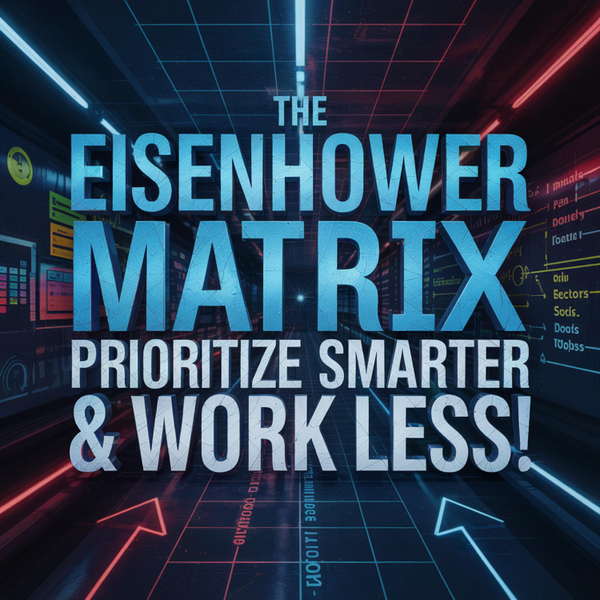
Urgent versus important: the four-box framework that ends busywork and clarifies real priorities.
Feeling like your tasks are running the show instead of you? The Eisenhower Matrix might be your secret weapon for regaining control. It's the decision-making framework that helps you identify what truly matters, focus on high-impact tasks, and say goodbye to unnecessary busywork. Urgent and important: do it now. Important, not urgent: schedule it. Urgent, not important: delegate it. Not urgent and not important: delete it. The result is more focus, less stress, and a clear path toward your goals.
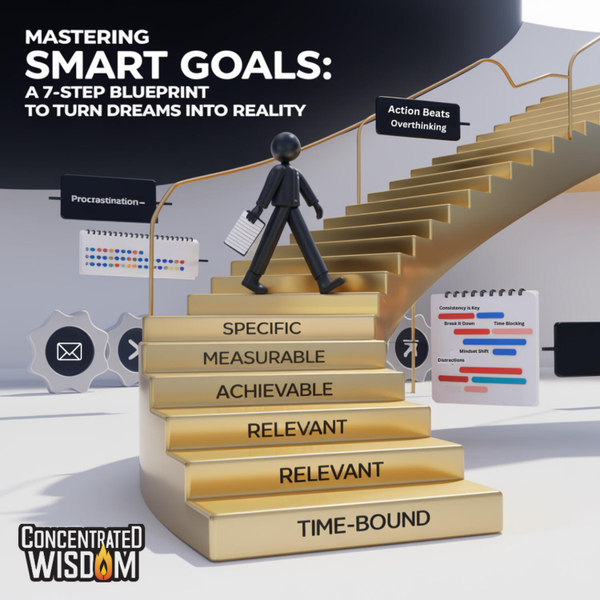
A 7-step blueprint for turning vague ambition into specific, measurable, time-bound progress.
Goals without a plan are just wishes, but you can turn ambitions into actionable, achievable results with SMART goals. This episode breaks down a 7-step blueprint to help you set specific, measurable, achievable, relevant, and time-bound goals that drive real progress. Learn how to break big aspirations into manageable tasks, track progress with clear metrics, and overcome common obstacles like procrastination and being overwhelmed.
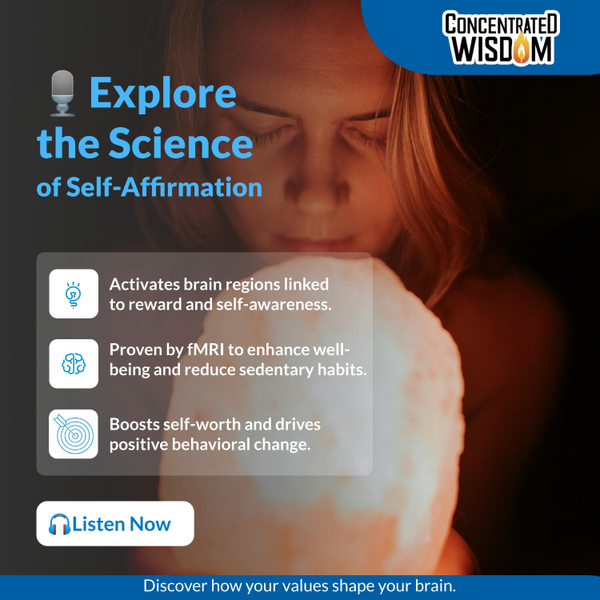
The neuroscience of self-affirmation: how reflecting on your values rewires the brain's reward system.
What if simple affirmations could reshape your brain, boost confidence, and drive positive change? This episode uncovers the neuroscience behind self-affirmation: how fMRI research links reflection on core values to motivation, self-worth, and lasting behavior change. Discover how future-focused affirmations activate reward centers in the brain, leading to mindset shifts and well-being breakthroughs.
Why constant stimulation kills deep thinking, and the two-week challenge that rebuilds attention.
Our modern world is drowning in distractions, costing us focus, creativity, and deep thinking. This episode explores how constant digital stimulation shortens attention spans and reduces problem-solving abilities, and why intentional boredom might be the answer. Learn how to limit screen time, embrace low-stimulation activities, and cultivate scatter focus, a state where the mind wanders freely, leading to breakthrough ideas and improved productivity.
Replace gossip and hedging with HAIL: the four-part method for speaking with honesty and impact.
Your words shape your world, so how can you communicate with clarity, confidence, and impact? This episode explores the art of effective communication, helping you break free from negative speaking habits like gossip, judgment, and exaggeration. Learn how to replace bad communication habits with HAIL, honesty, authenticity, integrity, and love, and master practical strategies like vocal exercises, active listening, and mindful speaking.
EEG research shows handwriting builds brain connectivity typing never touches. Here's the proof.
This Frontiers in Psychology research article delves into the neurological differences between handwriting and typing. Using high-density EEG, researchers analyzed brain connectivity in university students performing both tasks. The results revealed that handwriting significantly enhances brain connectivity, particularly in theta and alpha frequency bands, which are critical for learning and memory.
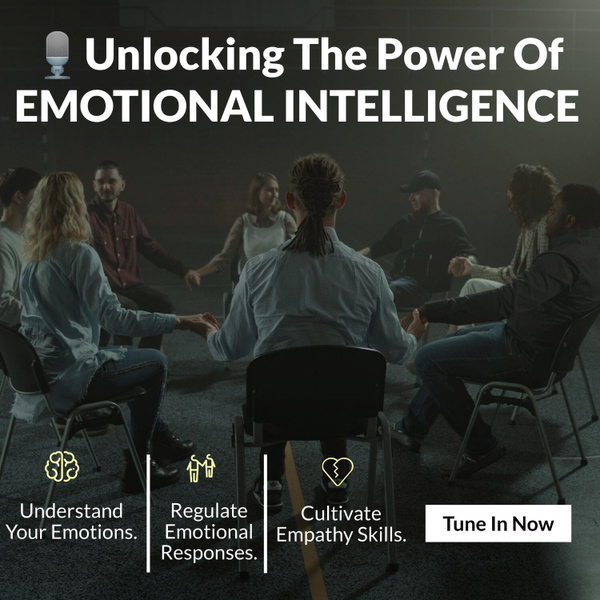
The four components of emotional intelligence, and how they rebuild resilience and relationships.
Emotional intelligence is the secret to better relationships, mental clarity, and personal success, but how do you actually develop it? In this episode, we break down the four core components of EI: self-awareness, empathy, emotional regulation, and interpersonal skills. Discover how emotional intelligence improves mental health, resilience, and decision-making while helping you manage stress, reframe negative thoughts, and strengthen relationships.
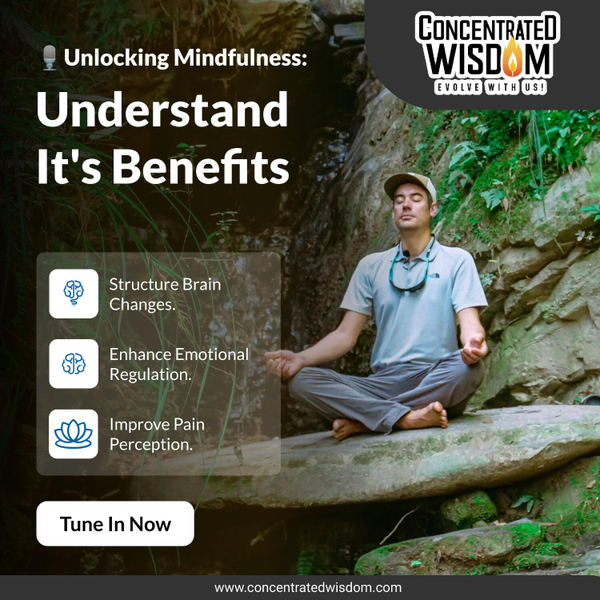
MBSR research on how meditation reshapes the brain for lower anxiety and sharper clarity.
Curious about how mindfulness and meditation reshape the brain? This episode explores the neuroscience of meditation, focusing on Mindfulness-Based Stress Reduction and its effects on brain health, neuroplasticity, and emotional regulation. Backed by research from MDPI, we break down how mindfulness improves mental health, reduces anxiety, enhances cognitive function, and strengthens psychological resilience.
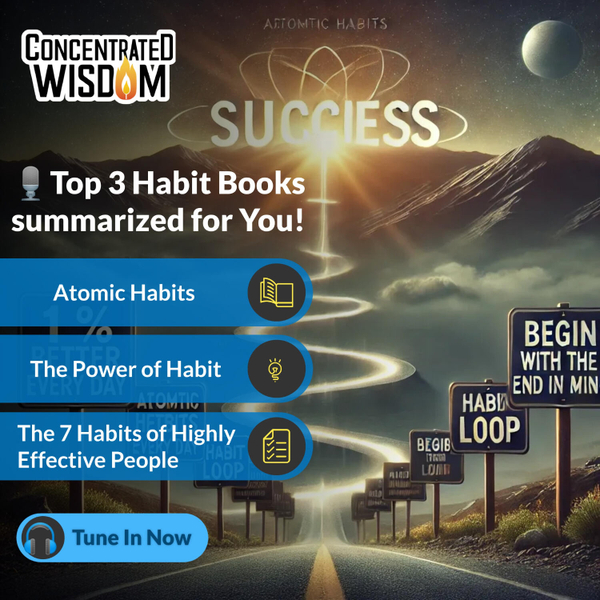
Atomic Habits, The Power of Habit, and The 7 Habits, distilled into one identity-based system.
Want to take control of your habits and transform your life? This episode breaks down the top 3 best-selling habit books: Atomic Habits by James Clear, The Power of Habit by Charles Duhigg, and The 7 Habits of Highly Effective People by Stephen Covey, distilled into powerful, actionable takeaways. Learn how to build identity-based habits, leverage the cue-routine-reward loop, and use keystone habits to create lasting change.
One email a week with the newest episode and the mental model behind it. No spam, unsubscribe anytime, and we never sell or share your email.