Concentrated Wisdom Editorial Team researches, writes, and fact-checks this guide against primary sources before publication.
This article is for informational purposes only and isn’t a substitute for personalized professional advice.
Jocko Willink and Leif Babin’s 2018 book The Dichotomy of Leadership, the sequel to Extreme Ownership, argues that effective leadership means holding twelve real, opposing tensions in balance rather than picking a single fixed style. This guide names and explains six of those dichotomies with real specificity, caring for people while still accomplishing the mission, owning everything while empowering others, holding high standards without being domineering, staying disciplined without becoming rigid, holding people accountable without micromanaging, and being a good follower to your own chain of command, not just a leader to the people below you.
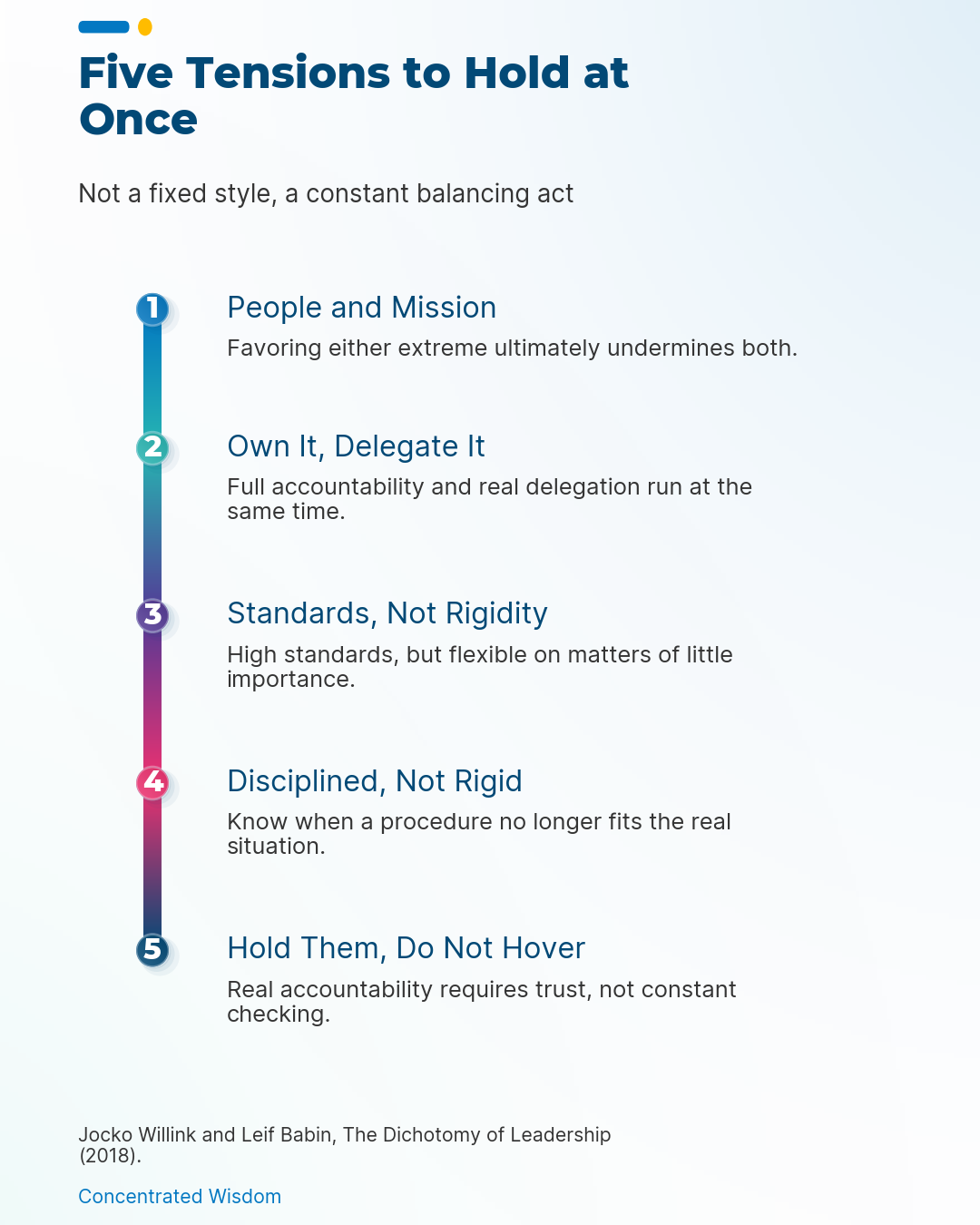
The Dichotomy of Leadership, written by Jocko Willink and Leif Babin and published in 2018 as the sequel to their book Extreme Ownership, argues that leadership is not about adopting one fixed style but about constantly balancing opposing tensions. The book covers twelve such dichotomies. Among the most discussed are the balance between caring for your people and still accomplishing the mission, the balance between owning every outcome as a leader while empowering others to make real decisions, the balance between holding high standards and driving a team hard without becoming domineering or inflexible over matters of little strategic importance, the balance between staying disciplined and following procedure while still knowing when to depart from it, and the balance between holding people accountable and actually trusting them enough not to micromanage every task.
Jocko Willink and Leif Babin’s The Dichotomy of Leadership, published in 2018 as the sequel to their earlier book Extreme Ownership, argues that leadership is not one fixed style, it is a constant balancing act across twelve named tensions. Here are six of them, explained, not just listed.
Care for Your People, and Still Accomplish the Mission
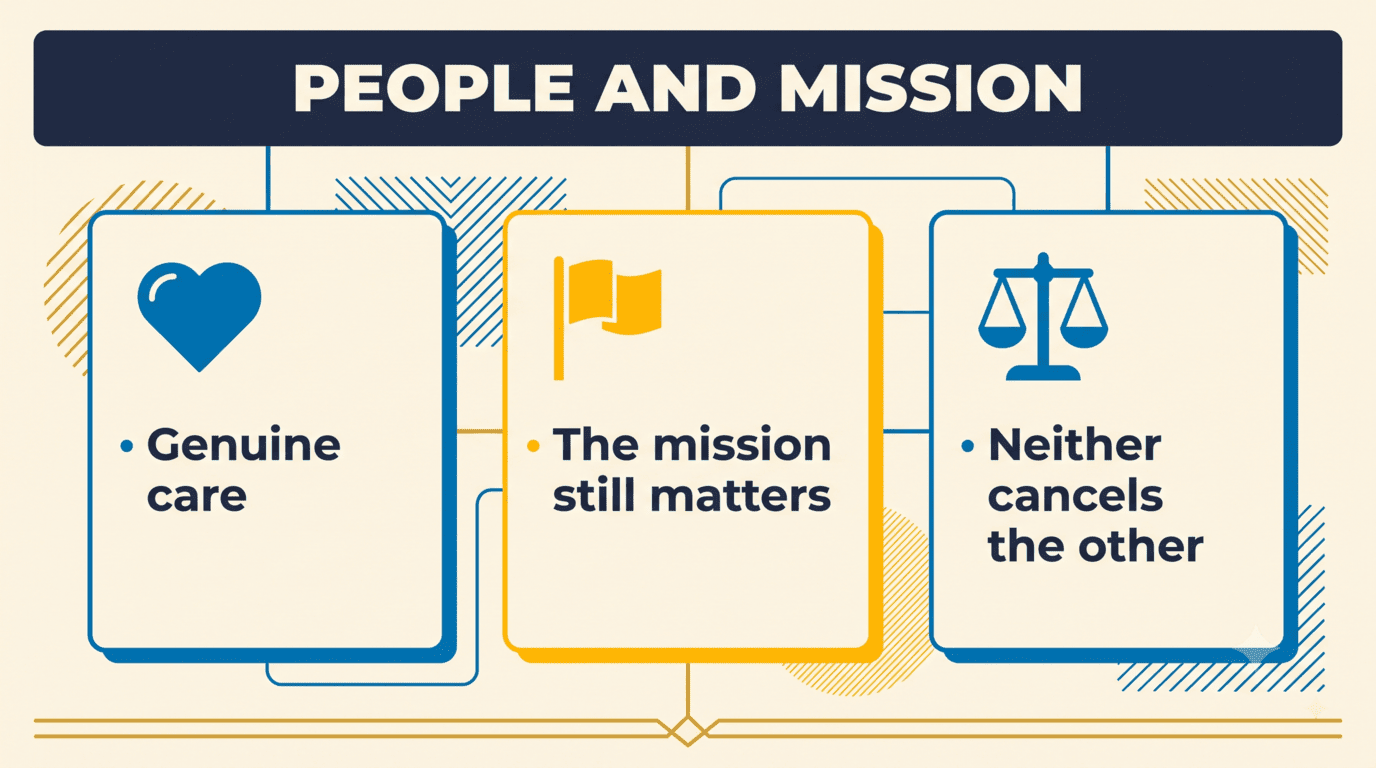
Willink and Babin argue that a leader who cares for people at the expense of the mission fails both, an organization that misses its actual purpose eventually stops being able to support the people in it. A leader who drives the mission while ignoring people burns through them and loses the mission anyway once trust collapses. Neither extreme is the answer, holding both at once is the actual skill.
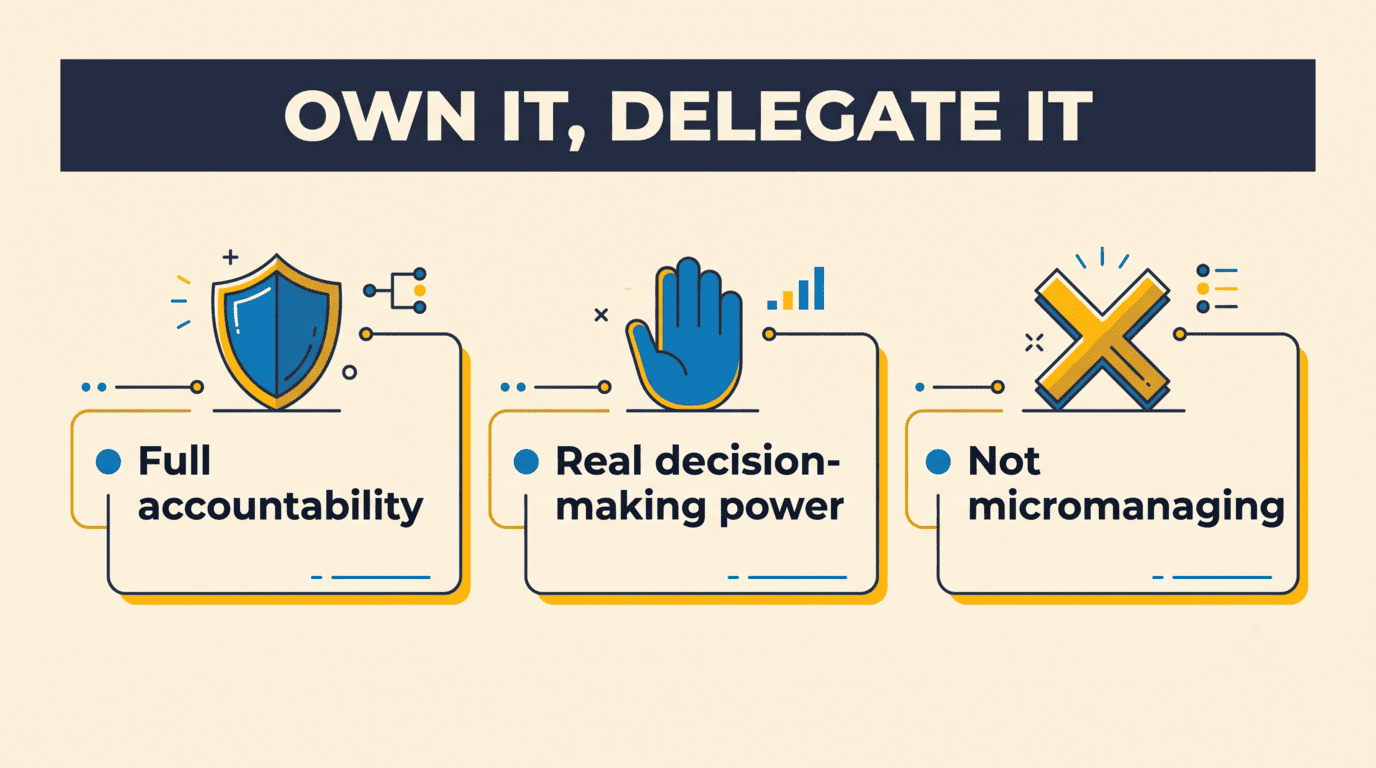
Own Everything, But Empower Others
A leader who owns every outcome (the core principle of Willink and Babin’s earlier Extreme Ownership) but never actually hands off real decision-making power becomes the single point of failure for everything, and their people never develop the judgment the leader is theoretically responsible for building. Full accountability and genuine delegation are meant to run at the same time, not as sequential phases.
Related: Books on Leadership Skills
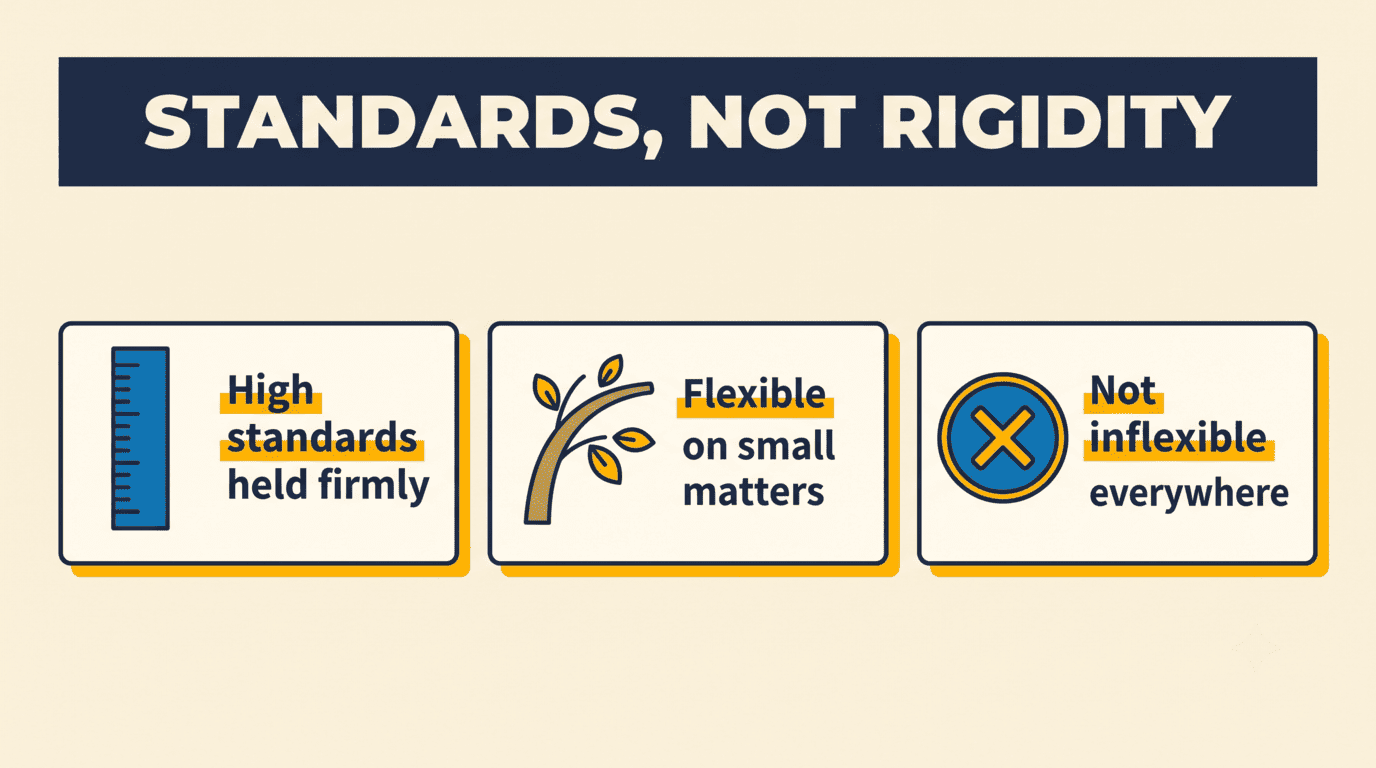
High Standards Without Becoming Domineering
Willink and Babin’s third named dichotomy is that a leader must set high standards and drive the team to meet them, but cannot be domineering or inflexible in matters of little real strategic importance. A leader who treats every small decision with the same rigidity as a genuinely high-stakes one burns credibility on the wrong hills, leaving less authority in reserve for the moments that actually matter.
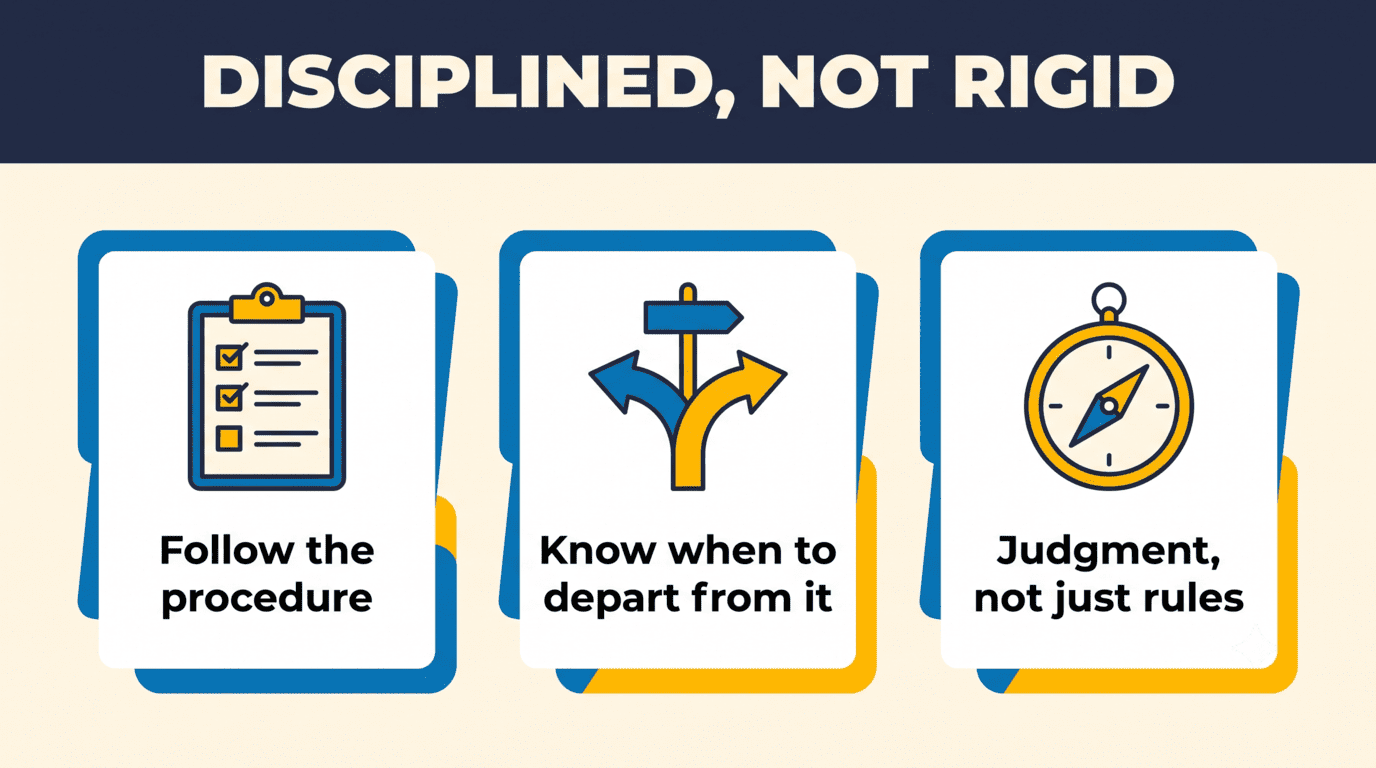
Disciplined, Not Rigid
A related dichotomy addresses when to follow standard operating procedures and when a leader should recognize a specific situation calls for departing from them. Discipline without the judgment to know when a procedure no longer fits the actual situation on the ground becomes a liability rather than an asset, the discipline itself was never the point, executing the mission well was.
Accountability Without Micromanaging
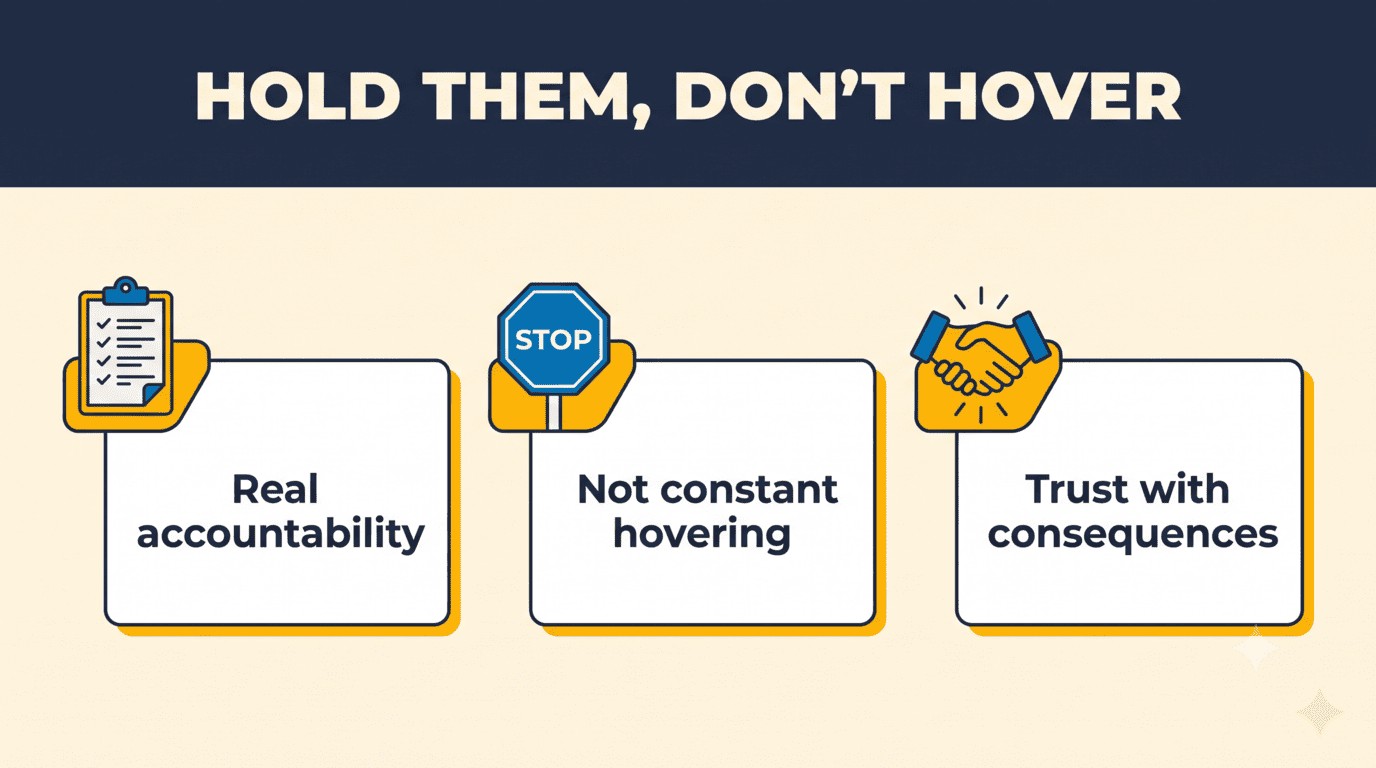
The final dichotomy discussed here addresses holding people accountable without hand-holding every step, real accountability means trusting someone enough to let them own the task and its outcome, then following up on the result, rather than checking every intermediate step because trust was never actually extended in the first place.
A Leader and a Follower
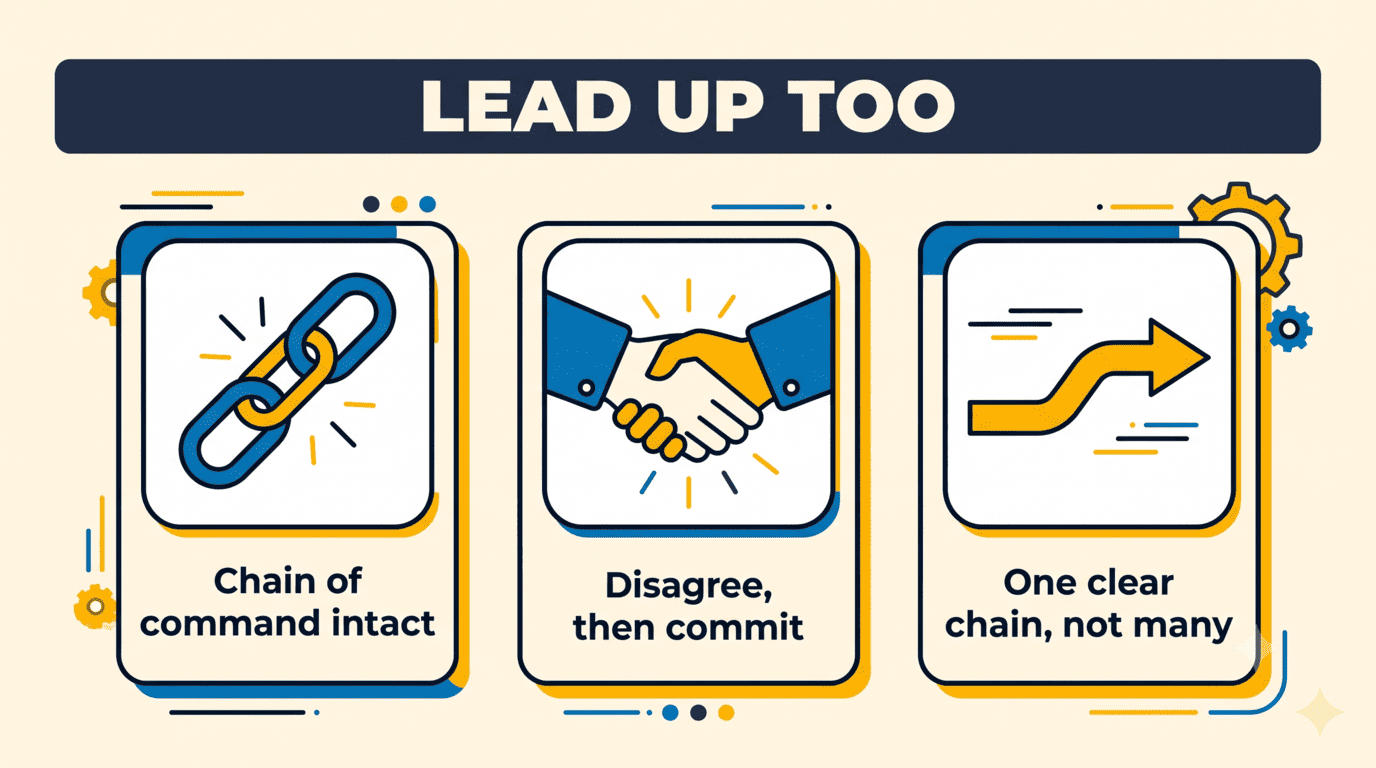
A sixth dichotomy Willink and Babin name directly is that a good leader also has to be a good follower, leadership does not stop being real just because someone else outranks you. The chain of command has to hold in both directions, which in a business context means treating your own boss with the same respect you expect your own team to show you, not reserving your best judgment and effort only for the people reporting to you.
One of a leader’s most important jobs is supporting their own boss’s call even after disagreeing with it, voicing the disagreement plainly, then executing the decision as if it were their own once it is made, rather than quietly undermining it or relitigating it in front of the team. Willink and Babin also warn against the reverse failure, a team paralyzed by too many people trying to lead at once, sometimes the actual fix is not more leadership, it is naming one clear chain of command and giving that person real authority instead of diffusing it across a committee.
- Name one decision this week where you leaned too far toward mission at the expense of a specific person, or the reverse.
- Check whether you handed off a real decision this week, or just delegated the task while keeping the actual call yourself.
- Identify one low-stakes rule you are currently enforcing rigidly, and consider whether it is worth the credibility it costs.
- Pick one task you are currently checking too frequently, and set a single follow-up point instead of constant monitoring.
- Name one call your own boss made recently that you disagreed with, and check whether you actually executed it fully or quietly slow-walked it.
Related: Entrepreneurship & Leadership
Quick Summary
Jocko Willink and Leif Babin’s 2018 book The Dichotomy of Leadership argues that effective leadership means balancing twelve real, opposing tensions rather than committing to one fixed style. Six of the clearest are caring for people while still accomplishing the mission, owning every outcome while genuinely empowering others, holding high standards without becoming domineering over minor matters, staying disciplined while knowing when to depart from procedure, holding people accountable without micromanaging every step, and being a good follower to your own chain of command, not just a leader to everyone below you.
Related: Command and Control Leadership Style
Frequently Asked Questions
What is the Dichotomy of Leadership about?
The Dichotomy of Leadership, written by Jocko Willink and Leif Babin and published in 2018 as the sequel to Extreme Ownership, argues that effective leadership requires balancing twelve real, opposing tensions rather than adopting a single fixed leadership style.
What is one of the dichotomies Jocko Willink discusses?
One central dichotomy is caring for your people while still accomplishing the mission. Willink and Babin argue that a leader who favors one extreme at the expense of the other ultimately fails at both, since an organization that misses its purpose can no longer support its people, and a leader who ignores people eventually loses the mission once trust collapses.
How many dichotomies does the book cover?
The Dichotomy of Leadership covers twelve named dichotomies in total, addressing tensions across accountability, discipline, standards, and the balance between ownership and delegation.
Is The Dichotomy of Leadership a sequel to another book?
Yes, it is the second book in the Extreme Ownership series by Jocko Willink and Leif Babin, building on the ownership-focused principles of their first book, Extreme Ownership, by adding the concept of balancing opposing leadership tensions.