Free Download
Free Therapy Worksheets for Kids (Plus What’s in a Full Bundle)
A print-ready PDF version of this guide. No email required.
Concentrated Wisdom Editorial Team researches, writes, and fact-checks this guide against primary sources before publication.
This article is for informational purposes only and isn’t a substitute for personalized professional advice.
A good kids’ therapy worksheet targets exactly one skill in age-matched, drawing-based language, not five skills in adult vocabulary. This guide covers the five main worksheet types (feelings identification, coping skills, CBT adapted for kids, social skills, and self-esteem), names a real free source worth using (Therapist Aid), and lays out the One-Skill Worksheet Test, Concentrated Wisdom’s own three-question framework for judging any worksheet before you print it.
Therapy worksheets for kids fall into five main types. Feelings or emotion identification worksheets build a child’s emotional vocabulary through faces, color charts, or body outlines. Coping skills worksheets teach one concrete calm-down strategy for a specific trigger. CBT worksheets adapted for kids connect a thought, a feeling, and a behavior using a concrete example a child understands. Social skills worksheets practice one interaction at a time, like sharing or reading a facial expression. Self-esteem worksheets focus on effort and self-talk rather than only outcomes. A good one targets a single skill in age-matched, drawing-based language rather than several skills in adult vocabulary. Legitimate free options exist, including Therapist Aid, a free worksheet library founded by a licensed mental health counselor that lets users filter its library specifically by a Children demographic. A single free worksheet’s real limitation is scope and consistency, not quality, since most cover one skill with no matching design across pages, while a structured bundle covers a fuller range of skills in one cohesive set.
What Makes a Kids’ Therapy Worksheet Actually Work
A kids’ therapy worksheet works when a child can finish it without an adult translating every line first. That’s the real test, not how polished the PDF looks or how many activities are packed onto one page. Three things separate a worksheet a child will actually use from one that ends up half-filled in a folder: age-matched language, a draw-or-circle format instead of a wall of text, and a single skill the page is built around.
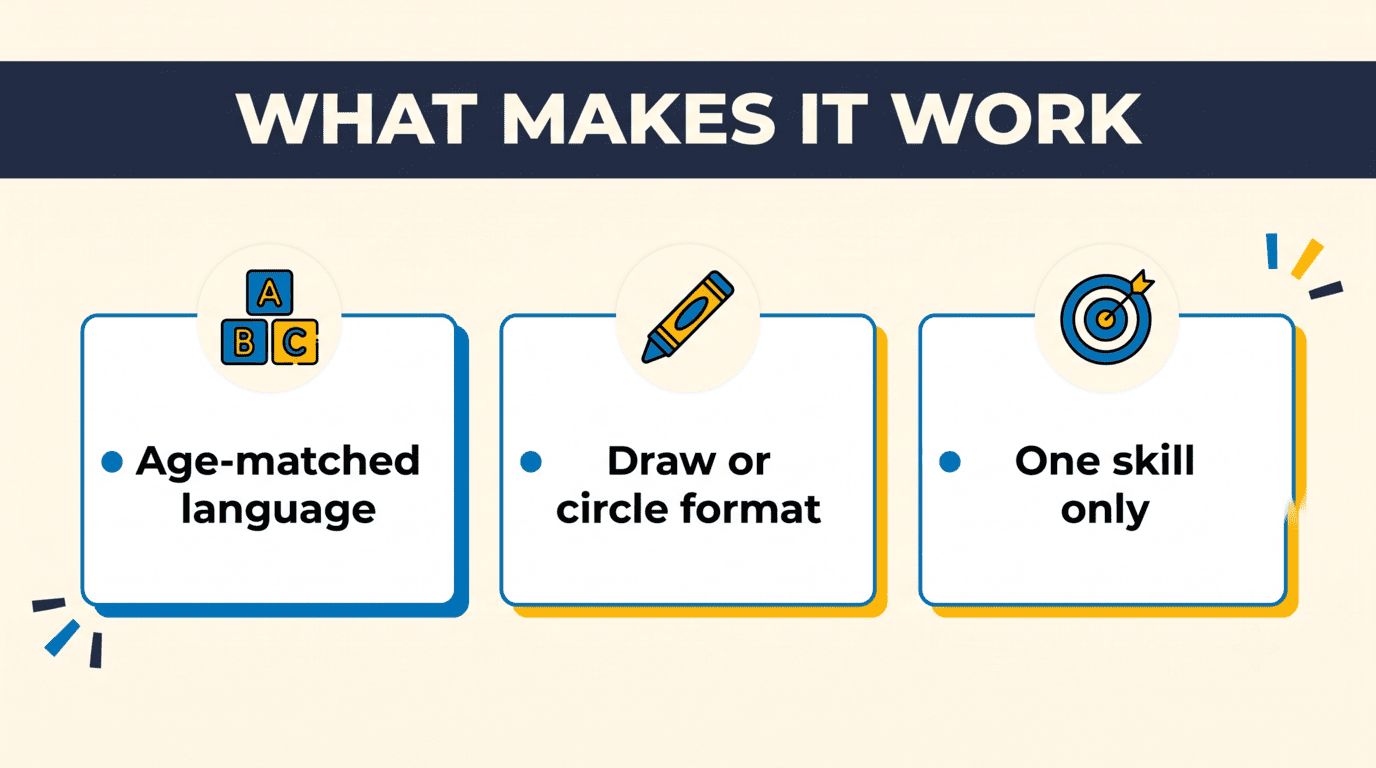
Age-appropriate language means the sentences match the reading level of the child using the page, not the reading level of the adult who found it online. A worksheet written in a therapist’s clinical vocabulary, then handed to a seven-year-old, asks the child to do two jobs at once: decode the words, and do the emotional work underneath them. Cut one of those jobs and the worksheet gets easier to finish.
Younger kids, roughly ages four through eight, do better with worksheets built around drawing, circling, or coloring than ones that ask for full sentences. A face a child can color to match how they feel, or a body outline where they mark where a feeling shows up, tends to get used. A blank line that says describe your feelings usually doesn’t, for a six-year-old who’s still learning to spell frustrated.
The Concentrated Wisdom editorial team pulled and reviewed several dozen free and paid kids’ therapy worksheets while researching this guide, sorted by age band and by the specific skill each one claimed to target. The most common design flaw wasn’t bad art or confusing instructions. It was scope: a single page trying to cover naming five emotions, rating their intensity, picking a coping skill, and writing a reflection, all in one sitting. A worksheet that does one thing well gets finished. A worksheet that tries to do four things gets started and abandoned.
Related: Self-awareness Activities for Kids
The Main Types of Therapy Worksheets for Kids and What Each One Is For
Therapy worksheets for kids fall into five main categories, each built to target a different skill, not five ways of doing the same thing.
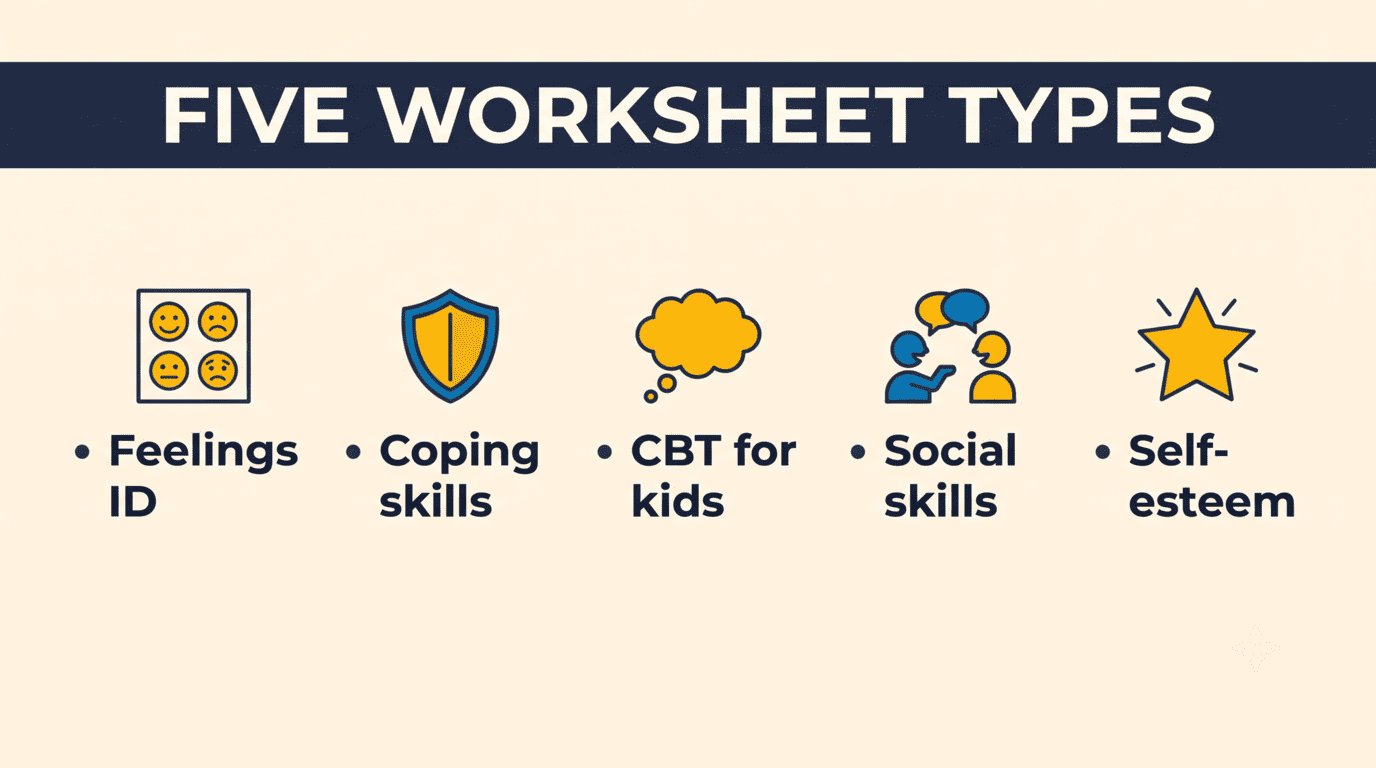
| Worksheet Type | What It Targets | Typical Age Range |
|---|---|---|
| Feelings / emotion identification | Naming an emotion and noticing where it shows up in the body | 4 to 8 |
| Coping skills | One concrete calm-down strategy for a specific trigger, like a meltdown or a scary thought | 5 to 12 |
| CBT worksheets adapted for kids | Connecting a thought, a feeling, and a behavior in plain, concrete language | 7 to 12 |
| Social skills | Practicing one interaction at a time, like sharing, taking turns, or reading a facial expression | 5 to 10 |
| Self-esteem | Noticing effort, strengths, and self-talk instead of only outcomes | 6 to 12 |
Feelings identification worksheets are usually the entry point, since a child can’t manage an emotion she can’t name yet. A face chart, a color-by-feeling page, or a simple where do you feel it in your body outline all do the same underlying job: building an emotional vocabulary before asking a child to regulate anything with it.
CBT worksheets adapted for kids strip out the clinical language of a standard cognitive behavioral worksheet and replace it with a concrete example a child already understands, a broken toy, a friend who didn’t want to play, a test that felt too hard, then walk through what the child thought, how it felt, and what they did next. Done well, it’s the same thought-feeling-behavior loop used in adult CBT, just built around a Lego set instead of a mortgage payment.
Related: Growth Mindset Worksheet for Kids
Where Legitimate Free Therapy Worksheets for Kids Actually Exist
Real, free therapy worksheets for kids do exist, and Therapist Aid is one of the clearest examples.
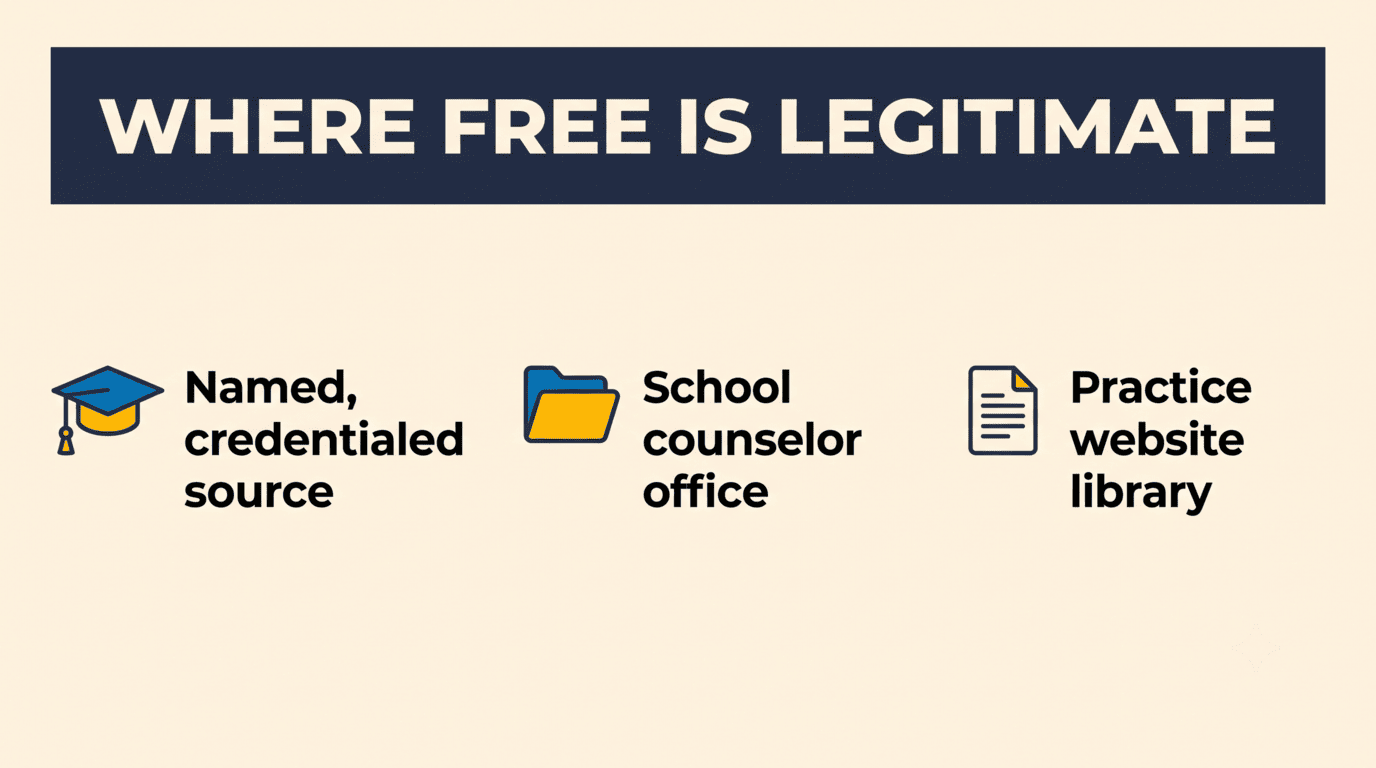
Therapist Aid is a free worksheet library founded in 2012 by Woody Schuldt, a licensed mental health counselor, after he found that too many worksheets available online were either full of clinical jargon or lacked any real foundation behind them. The site’s worksheet library can be filtered by demographic, including a Children option, alongside topic filters like anger, anxiety, emotions, and self-esteem, and the worksheets download as free PDFs.
ChoosingTherapy.com is a second clear example, publishing its kids’ worksheet library, including a step-by-step fear worksheet for gradually facing anxiety and a big-feelings check-in worksheet, under named, credentialed clinical authors like Elizabeth Nick, PhD, and Melissa Boudin, PsyD, rather than an anonymous byline.
Beyond those two, a few other places consistently produce legitimate free worksheets worth checking: a child’s school counselor’s office (most keep a folder of vetted handouts they’ll share on request), a pediatrician’s or children’s hospital patient-education page, and the free-resource libraries some licensed therapists publish on their own practice websites.
The pattern worth watching for either way: a real name and credential attached to who made the worksheet, not just a download button. A page with no named author, no credential, and ad banners wrapped around the download link isn’t automatically wrong, but it earns a slower look before it gets handed to a child.
What a Single Free Worksheet Can’t Do
A single free worksheet’s real limitation isn’t quality, it’s scope and consistency.
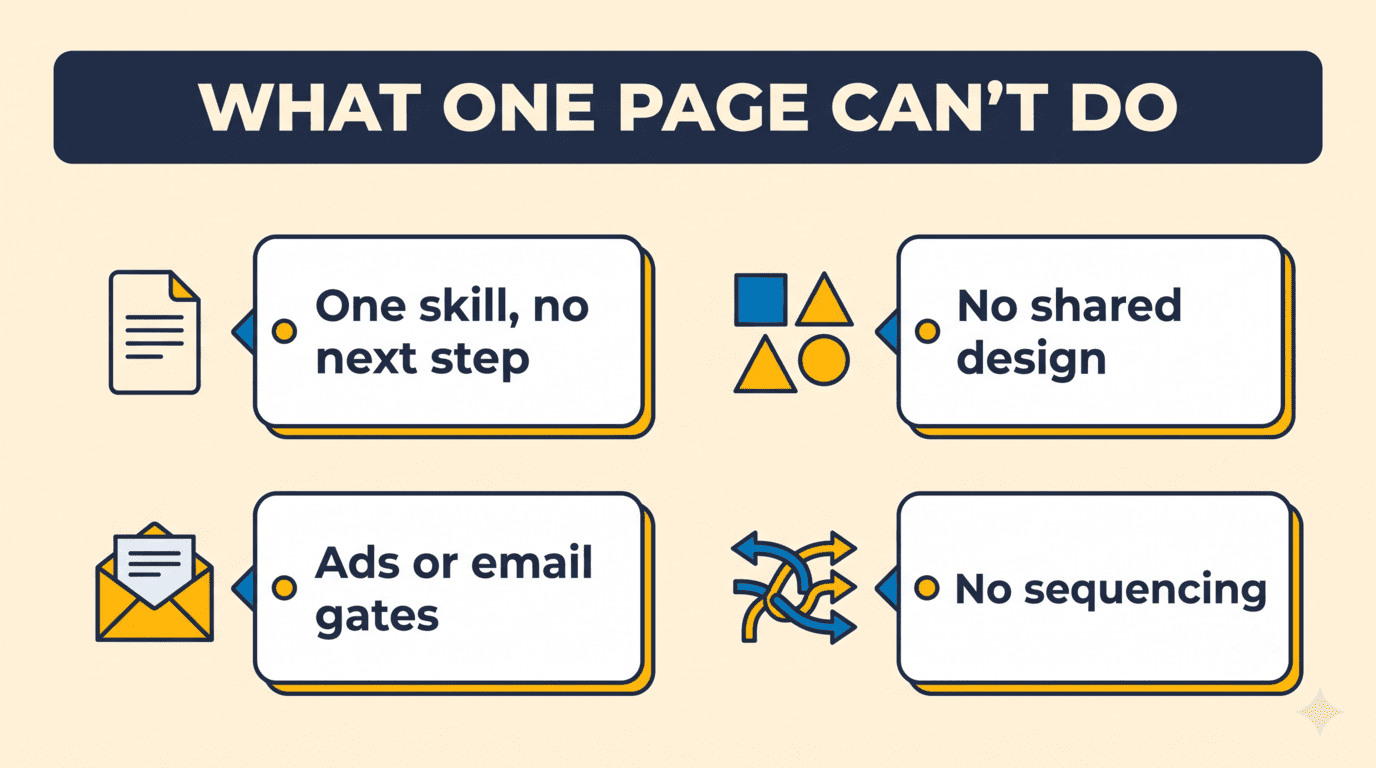
- One worksheet, one skill, with no built-in next step once a child finishes it
- No shared design across pages pulled from different sites, so a second free worksheet rarely matches the first in tone, reading level, or layout
- Ads on the page or an email address required before the PDF unlocks, which isn’t always disclosed up front
- No sequencing, meaning nothing tells a parent or counselor which skill to work on first, or what to hand a child once they’ve outgrown the page they just finished
None of that makes a free worksheet a poor choice. It makes it a narrow one, useful for a single situation rather than a full toolkit a parent or counselor can lean on across weeks of sessions or bedtime check-ins.
Related: Coping Skills for Kids With Adhd
The One-Skill Worksheet Test
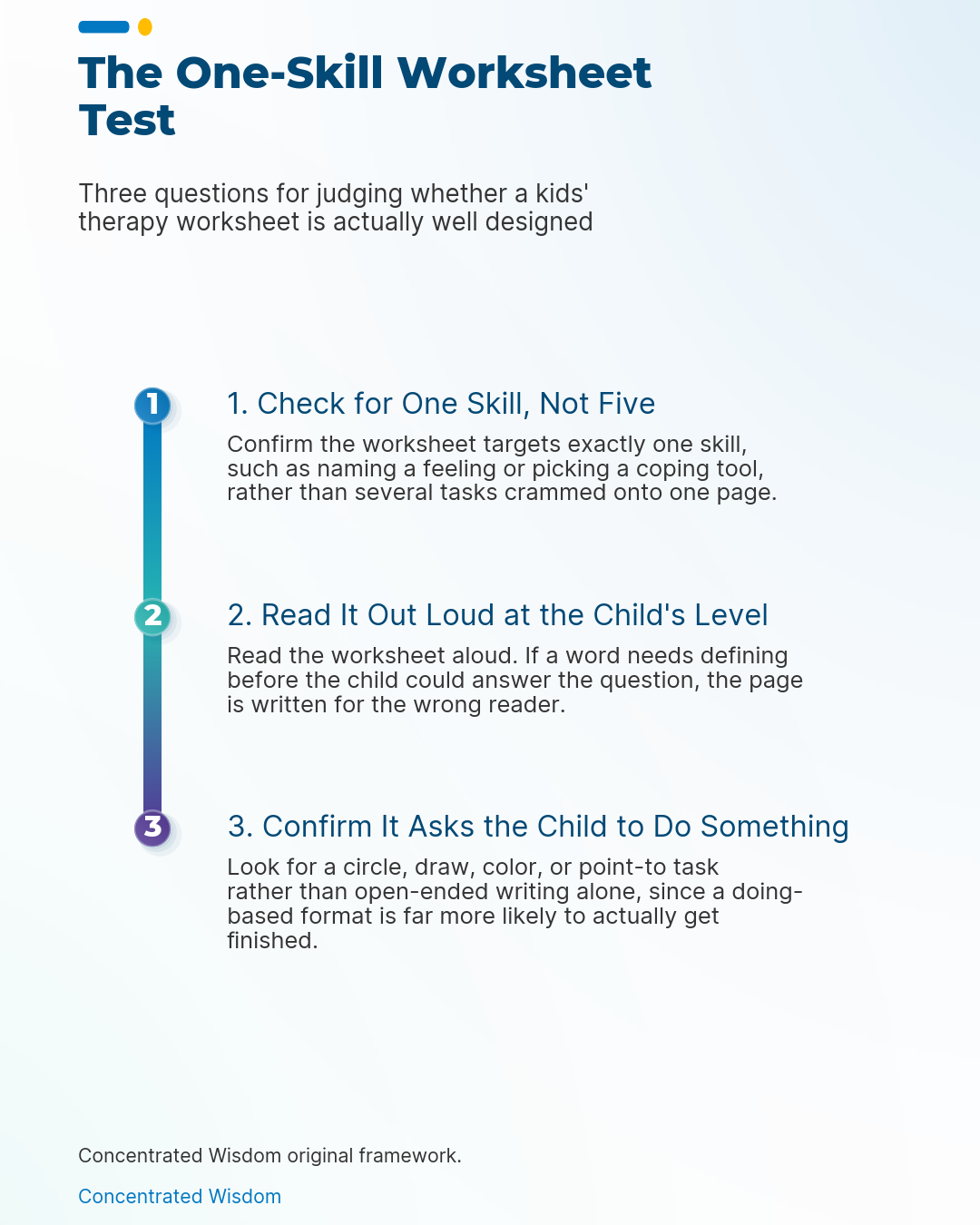
The One-Skill Worksheet Test is a fast way to judge whether a worksheet is actually well designed before printing it: ask whether it targets exactly one skill, whether the language matches the child’s real reading level, and whether it asks the child to do something rather than just read something.
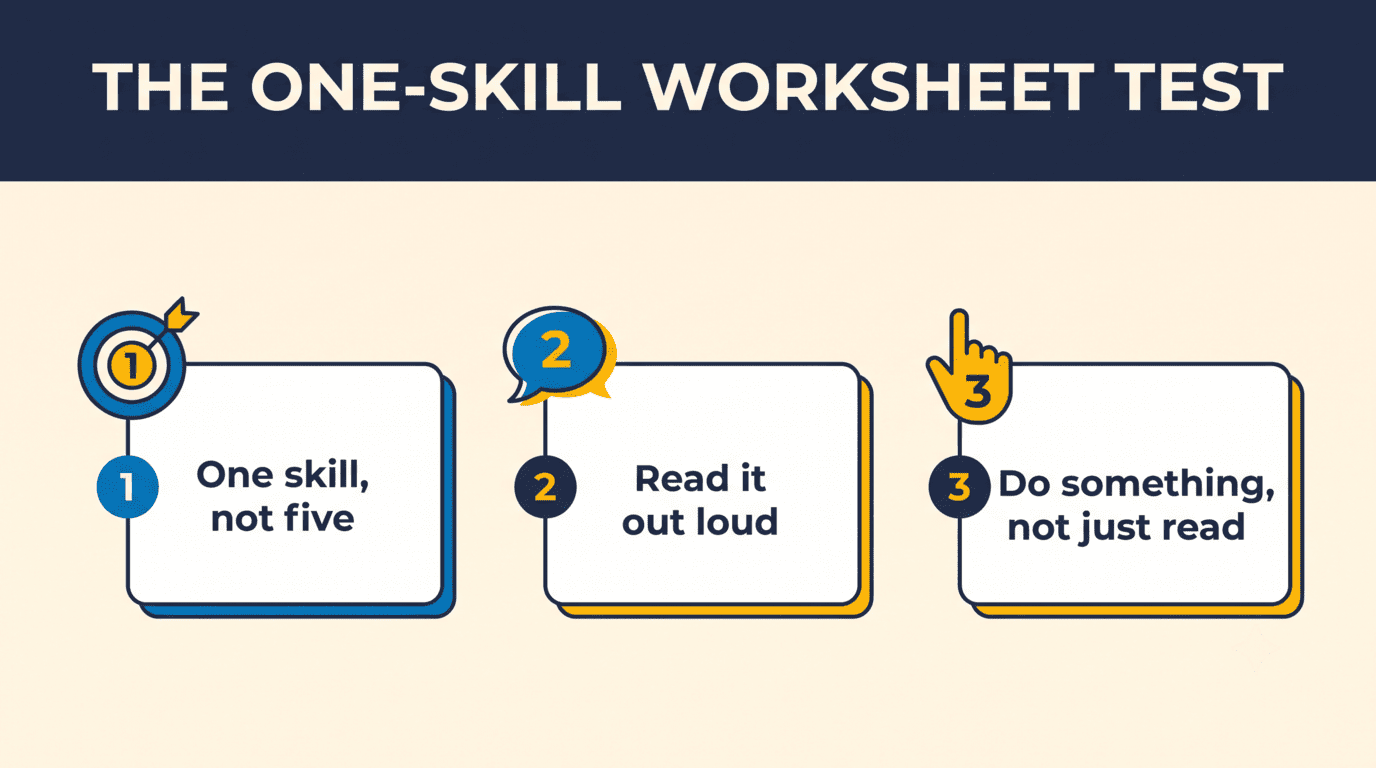
- Does it target one skill? A worksheet trying to cover five feelings, a coping tool, and a written reflection in one page is asking too much of a young reader
- Is the language pitched at the child, not the adult? Read it out loud. If a word needs defining before a seven-year-old could answer the question, the worksheet is written for the wrong reader
- Does it ask the child to do something? Circle, draw, color, or point to, not just read and think. A worksheet that only asks a child to read rarely gets finished
A worksheet that passes all three checks is worth printing, whether it’s free or came from a paid bundle. A worksheet that fails even one is worth skipping, no matter how good the design looks on screen.
Related: Mental Health Activities for Kids
Free Therapy Worksheets vs. a Structured Bundle at a Glance
The table below lines up what each option actually delivers, based on the free worksheets this guide’s research pulled and reviewed.
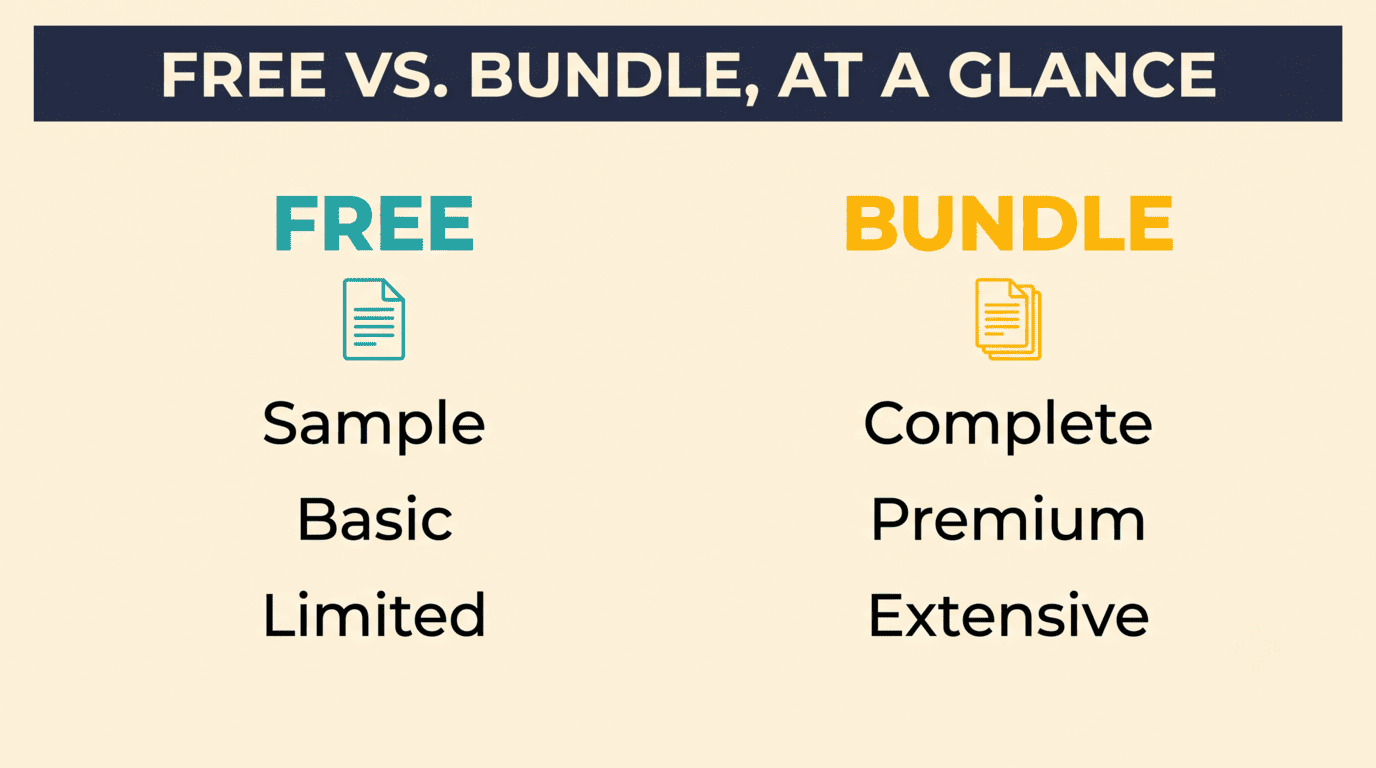
| What You’re Comparing | A Single Free Worksheet | A Structured Bundle |
|---|---|---|
| Number of skills covered | Usually one | A fuller range across feelings, coping, CBT-style, social, and self-esteem skills |
| Design consistency | Varies by source, rarely matches other downloads | One matching look and reading level across every page |
| Ads or email gate | Sometimes | No |
| Sequencing | None, one page with no built-in next step | Built to be worked through over time |
| Best for | Trying one specific skill or situation right now | A parent or counselor building an ongoing toolkit |
Concentrated Wisdom’s own Kids’ Self-Reflection & Wellness Journals bundle is one example of the structured side of that table, a set of themed journals covering feelings, courage, calm, gratitude, and self-worth, built with the same design and reading level across every page. It isn’t a replacement for the free worksheets described above, and it isn’t positioned as one. A single free feelings-identification worksheet is still the right call for a parent who wants to try naming emotions with their child tonight. A bundle is there for a parent or counselor who already knows they want that skill-building to continue past one page, without hunting down and mismatching a new free download every time a new skill comes up.
***Neither the free route nor a bundle is the wrong choice, it’s only the wrong choice when it doesn’t match what the child, or the parent, actually needs right now.***
Related: Parenting & Child Development
Frequently Asked Questions
Are free therapy worksheets for kids actually effective?
Yes, when they’re well designed. A free worksheet that targets one skill in age-appropriate language and asks a child to draw, circle, or point rather than only read can work just as well as a paid one for that single skill. The tradeoff isn’t quality, it’s scope, since most free downloads cover one skill rather than a full range.
What age should a child be to start using therapy worksheets?
Most feelings-identification worksheets work for kids as young as four or five, especially drawing and coloring formats. CBT-adapted worksheets that ask a child to connect a thought, a feeling, and a behavior tend to work better starting around age seven or eight, once a child can hold that kind of multi-step reasoning.
Do therapy worksheets work for kids with ADHD?
They can, with adjustments. Shorter worksheets, one task per page, and heavy use of drawing or circling over open writing tend to hold attention better for kids with ADHD than longer, text-based pages. A worksheet that only asks for a written paragraph is usually the wrong format regardless of diagnosis, but that problem shows up more often for kids with ADHD specifically.
Can a parent use therapy worksheets without a therapist involved?
Yes, for everyday emotional skill-building. A parent can use a feelings-identification or coping-skills worksheet at home without a therapist present. Worksheets that ask a child to process a specific trauma or a diagnosed condition are better used alongside a licensed professional, not as a stand-alone replacement for treatment.
What is a fear ladder worksheet for kids?
A fear ladder is a coping-skills worksheet that breaks down something a child is afraid of into a sequence of smaller, less scary steps, letting them face the fear gradually instead of all at once. ChoosingTherapy.com publishes a version of this worksheet designed specifically for children, authored by a licensed clinician rather than an anonymous source. (Source)
Are worksheets from sites like ChoosingTherapy.com and Therapist Aid actually legitimate?
Yes, both publish their kids’ worksheets under named, credentialed clinical authors rather than an anonymous byline, which is the main marker of legitimacy to look for in a free worksheet source. Therapist Aid was founded by a licensed mental health counselor, and ChoosingTherapy.com’s kids’ worksheets are authored by licensed psychologists.