Concentrated Wisdom Editorial Team researches, writes, and fact-checks this guide against primary sources before publication.
This article is for informational purposes only and isn’t a substitute for personalized professional advice.
Being blocked reads as purely hostile in the moment, but the underlying decision is usually protective, a way of regulating overwhelm, avoiding a conflict, or maintaining safety, and which one it is depends heavily on timing. This guide separates blocking’s three protective functions using real research on physiological flooding during conflict, maps the timing patterns that indicate which one is actually happening, and covers what not to do in response, since escalating after being blocked tends to confirm the exact fear that caused it.
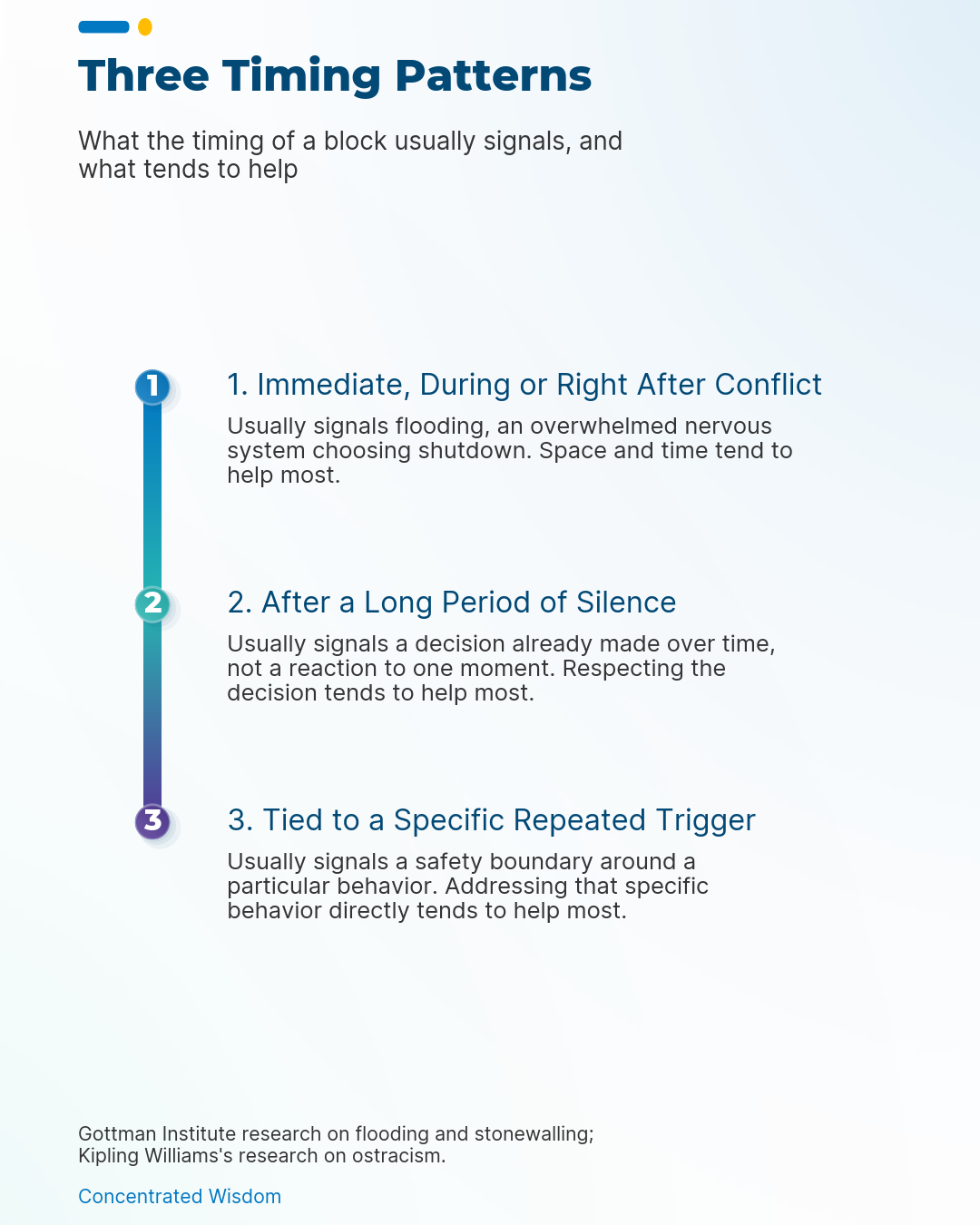
Being blocked is usually a protective decision rather than a purely hostile one, and the timing of when it happens indicates which protective function it’s serving. Research from the Gottman Institute, based on physiological monitoring of couples in what researcher John Gottman called the Love Lab at the University of Washington, found that when heart rate exceeds roughly 100 beats per minute during conflict, a state called flooding, the brain’s capacity for listening and problem-solving is measurably impaired, and stonewalling, including blocking, becomes a self-protective shutdown response rather than a calculated attack. Separately, psychologist Kipling Williams’s research on ostracism, including his Cyberball studies, found that social exclusion activates brain regions associated with physical pain, which explains why being blocked hurts as much as it does regardless of the blocker’s actual intent. Blocking immediately after a conflict usually signals flooding and a need to regulate, blocking after a long period of silence usually signals a decision already made rather than a reaction, and blocking tied to a specific repeated trigger usually signals a safety boundary around that particular behavior. Responding to any of these by escalating, calling from another number, messaging a mutual friend, tends to confirm the exact concern that caused the block in the first place.
The short answer: being blocked usually isn’t a purely hostile act, it’s most often a protective decision, regulating overwhelm, avoiding conflict, or maintaining safety, and the timing of when it happened is the clearest indicator of which one is actually driving it.
What Blocking Actually Protects
Emotional Regulation vs Avoidance vs Safety
The clearest research on the emotional-regulation function of blocking comes from John Gottman’s work on flooding, also called diffuse physiological arousal. Gottman’s research lab, monitoring couples’ heart rates during real conflict, found that once heart rate crosses roughly 100 beats per minute, the brain’s capacity for listening, empathy, and problem-solving measurably degrades. Stonewalling, shutting down or withdrawing from the interaction entirely, is what a flooded nervous system does when it chooses freeze over fight or flight. Blocking is a digital-era version of the same shutdown, a way of stopping input the nervous system can no longer process productively.
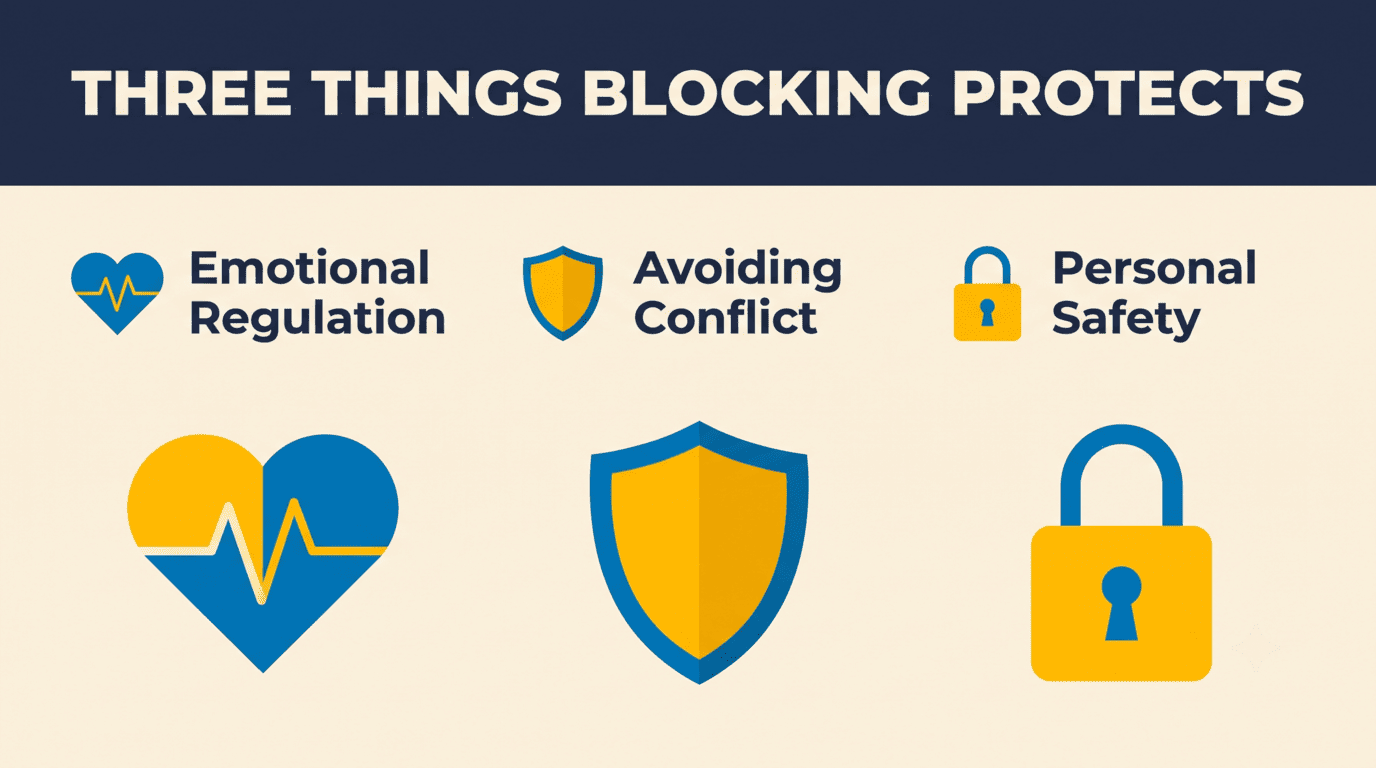
A second, distinct function is conflict avoidance. Blocking here isn’t about being overwhelmed in the moment, it’s a decision to sidestep a conversation entirely rather than have it, often because the person doesn’t believe the conversation will change anything or doesn’t want to manage the other person’s reaction to it.
The third function is safety, a boundary against a specific pattern of contact that has already crossed a line, repeated unwanted messages, showing up unannounced, contact after an explicit request to stop. This is the function where blocking is least about the immediate emotional state and most about a considered decision to remove access.
The Same Psychology, Different Platforms
The three protective functions above work the same way regardless of platform, but each interface shows a different, often ambiguous set of signals. On Instagram, a blocked account typically sees a “user not found” message, sent messages that stay on Sent without ever reaching Delivered, and an inability to follow the account again. On iMessage and WhatsApp, the clearest sign is a single checkmark where two would normally appear, along with a profile photo and status that quietly disappear.
None of these signals are fully conclusive on their own, app updates, privacy setting changes, and temporary outages can produce similar effects, which is part of why chasing certainty about a block rarely helps. The pattern across signals and time is worth paying attention to, not any single missing checkmark.
Related: Constantly Thinking About Someone Psychology
Reading the Timing and Context
Immediate Post-Conflict vs After-Silence vs Trigger-Specific Patterns
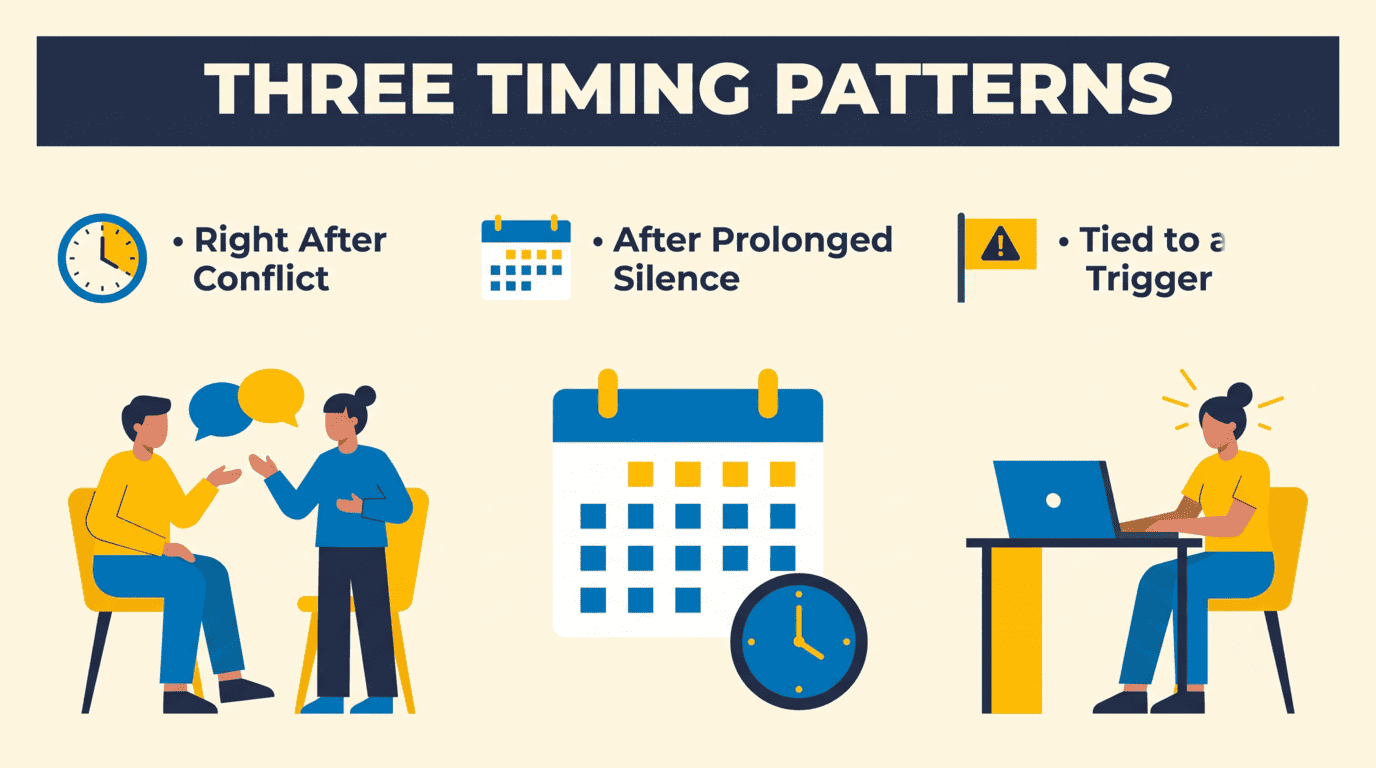
Timing is the single most useful piece of information available after being blocked, since the same action means something different depending on when it happened.
| Timing Pattern | What It Usually Signals | What Tends to Help |
|---|---|---|
| Immediate, during or right after a heated conflict | Flooding, an overwhelmed nervous system choosing shutdown over continued escalation | Space and time; the block may soften once heart rate and stress hormones return to baseline |
| After a long period of silence or slow withdrawal | A decision already made over time, not a reaction to one single moment | Respecting the decision; this pattern is the least likely to reverse quickly |
| Tied to a specific repeated trigger or boundary violation | A safety boundary around a particular behavior, not the relationship as a whole | Addressing the specific behavior directly rather than the block itself, if there is another route to communicate |
Research on boundary-setting and conflict-avoidance behaviors in close relationships shows a consistent pattern worth naming directly: the person being blocked almost always reads the timing through their own emotional state in the moment, not through the blocker’s. A block that arrived during a fight feels identical from the outside to a block that arrived after months of quiet deliberation, but the two are entirely different decisions, and treating them the same way in response usually makes things worse rather than better.
Responding Without Escalating
What Not to Do After Being Blocked
The felt urgency to be heard immediately after being blocked is real and, by Kipling Williams’s research on ostracism, genuinely painful; his studies found that social exclusion activates brain regions overlapping with physical pain response, which is part of why a block can feel disproportionate to the situation. That pain is a real signal worth acknowledging, but it is not, on its own, a reason to act.
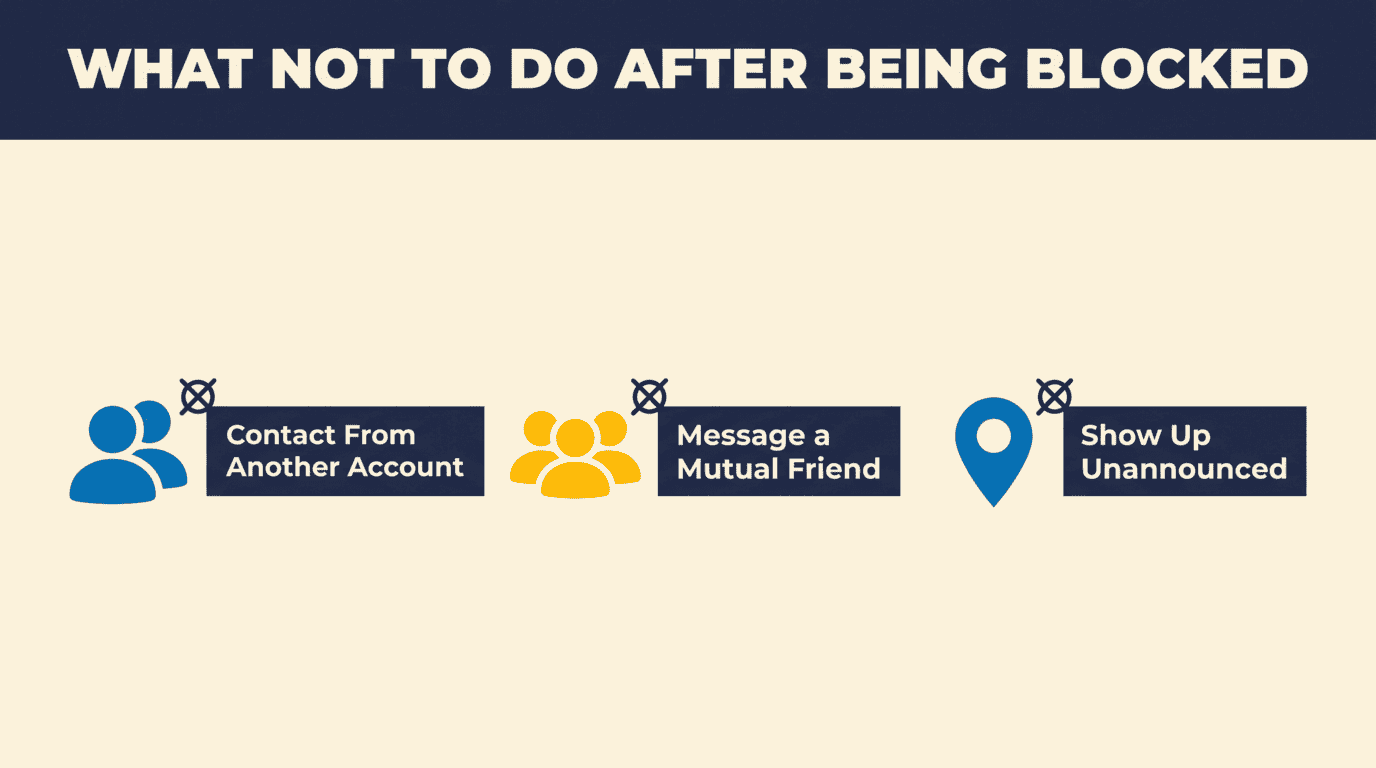
- Do not contact from a second account or another number; if the block was about safety or feeling unable to say no, this specific move directly confirms that exact fear
- Do not route the message through a mutual friend; it puts a third person in the middle and reads as pressure rather than respect for the decision
- Do not show up in person to force a conversation; a block already communicated a desire for distance, and physically closing that distance escalates rather than resolves it
- Do not interpret the block’s timing without considering which of the three protective functions is most likely, since the right response to flooding is patience, and the right response to a safety boundary is respecting it fully
If the block followed a single heated conflict and the relationship has a longer history of resolving disagreements well, giving it real time, not a follow-up attempt an hour later, is usually the more effective move than any message could be. If the block followed a slow withdrawal or a specific safety concern, the most respectful response is often no response at all.
Related: Psychology & Human Behavior
Frequently Asked Questions
Does getting blocked always mean someone hates you?
No. Blocking is more often a protective decision than a purely hostile one, regulating emotional overwhelm, avoiding a conflict, or maintaining a safety boundary. Research on flooding from the Gottman Institute found that once heart rate crosses roughly 100 beats per minute during conflict, shutdown responses like stonewalling become a self-protective reaction, not a calculated attack.
Will someone unblock you if you just wait?
It depends on the timing pattern behind the block. A block that happened immediately during a heated conflict is more likely to soften once emotional flooding subsides. A block that followed a long period of silence or slow withdrawal reflects a decision made over time and is the least likely pattern to reverse quickly.
Why does being blocked hurt so much even in a minor relationship?
Psychologist Kipling Williams’s research on ostracism found that social exclusion activates brain regions that overlap with physical pain response. That reaction happens regardless of how significant the relationship was, which is why being blocked can feel disproportionately painful even in a relatively minor connection.
Is it okay to contact someone through another account after they block you?
This is generally the wrong move. If the block was related to a safety boundary or a feeling of being unable to say no, contacting from another account or number directly confirms the exact concern that likely caused the block, and tends to escalate the situation rather than resolve it.